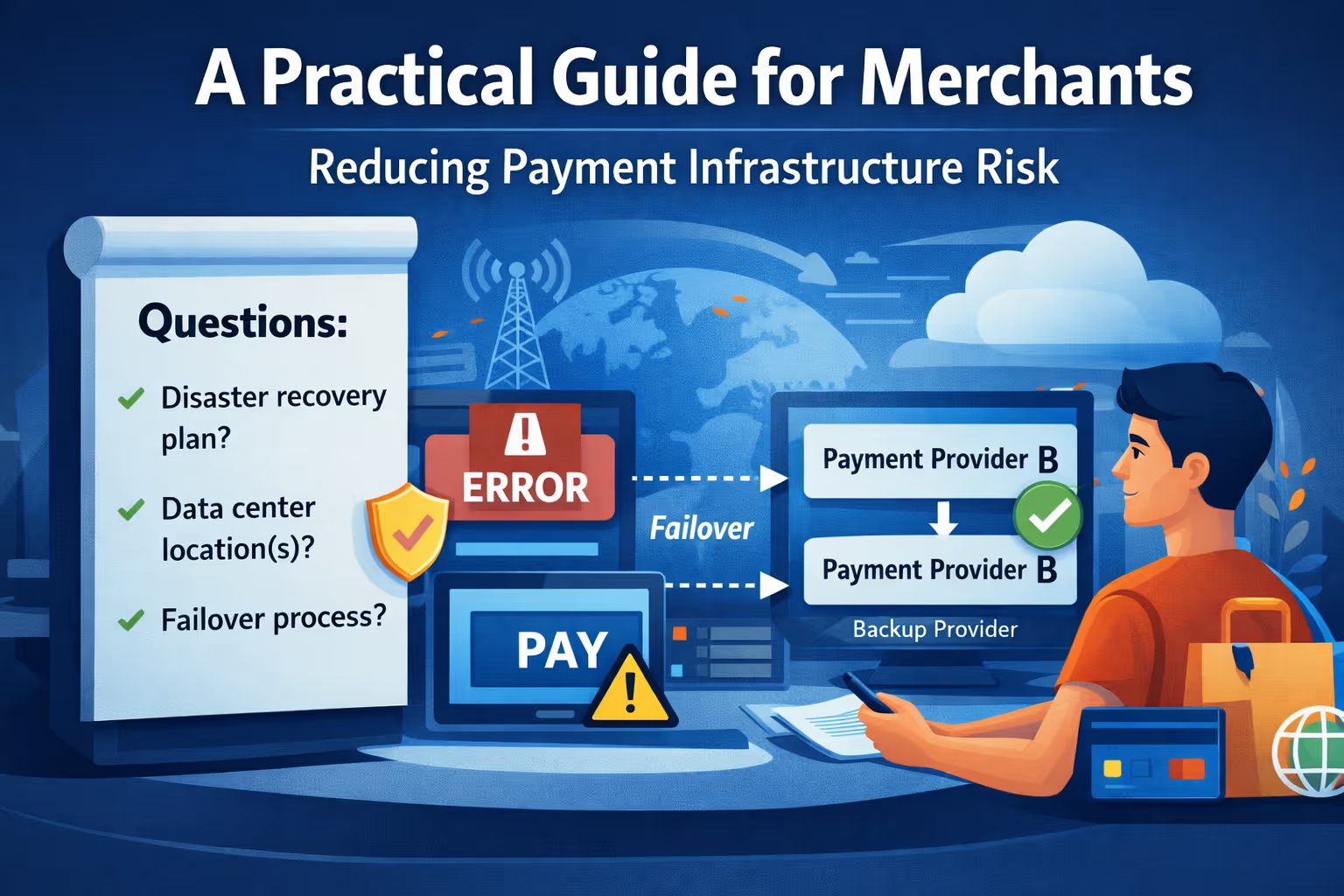
1. Ask Your Payment Provider About Their Disaster Recovery Setup
Merchants rarely ask detailed questions about the infrastructure behind their payment provider.
However, understanding how a provider handles outages is important for business continuity.
Some useful questions to ask include:
- Where are your primary and backup data centers located?
- Do you operate across multiple cloud regions or data centers?
- Is your infrastructure active-active or active-passive?
- How quickly can failover occur in case of an outage?
- How often is disaster recovery tested?
This helps merchants understand whether their payment provider relies on a single infrastructure location or multiple resilient systems.
2. Avoid Single Points of Failure
Many businesses unknowingly rely on a single payment provider.
While this may work well most of the time, it creates a potential single point of failure.
A simple mitigation strategy is to integrate at least one additional payment provider that can be used if the primary system becomes unavailable.
This does not necessarily require complex systems. Even a secondary payment option can provide valuable redundancy.
3. Diversify Infrastructure Where Possible
If a merchant uses multiple providers, it can be beneficial if those providers rely on different infrastructure environments.
For example:
- Different cloud providers (AWS, Azure, private infrastructure)
- Data centers located in different regions
- Different acquiring banks
This reduces the risk that a single infrastructure issue could affect all payment processing simultaneously.
4. Monitor Payment Performance
Merchants should regularly monitor key payment metrics such as:
- Payment approval rates
- Transaction latency
- System availability
Unusual changes can sometimes indicate infrastructure issues or routing problems that require attention.
5. Regularly Review Your Payment Setup
Business needs evolve over time.
As merchants expand into new markets, add new payment methods, or increase transaction volumes, their payment infrastructure should be reviewed periodically to ensure it remains scalable and resilient.
Designing Payments for Resilience
Payments are a critical part of any business’s operations. While outages are relatively rare, the impact when they occur can be immediate.
A resilient payment strategy does not necessarily mean replacing your current provider. Instead, it involves designing a system that can continue operating even when parts of the infrastructure experience disruption.
At PaySelect, we help merchants evaluate payment providers and design payment setups that align with their business needs, markets, and long-term growth plans.
Because when payments stop, businesses stop.
And the best way to manage that risk is to plan ahead.
Empowering businesses to achieve greater growth