

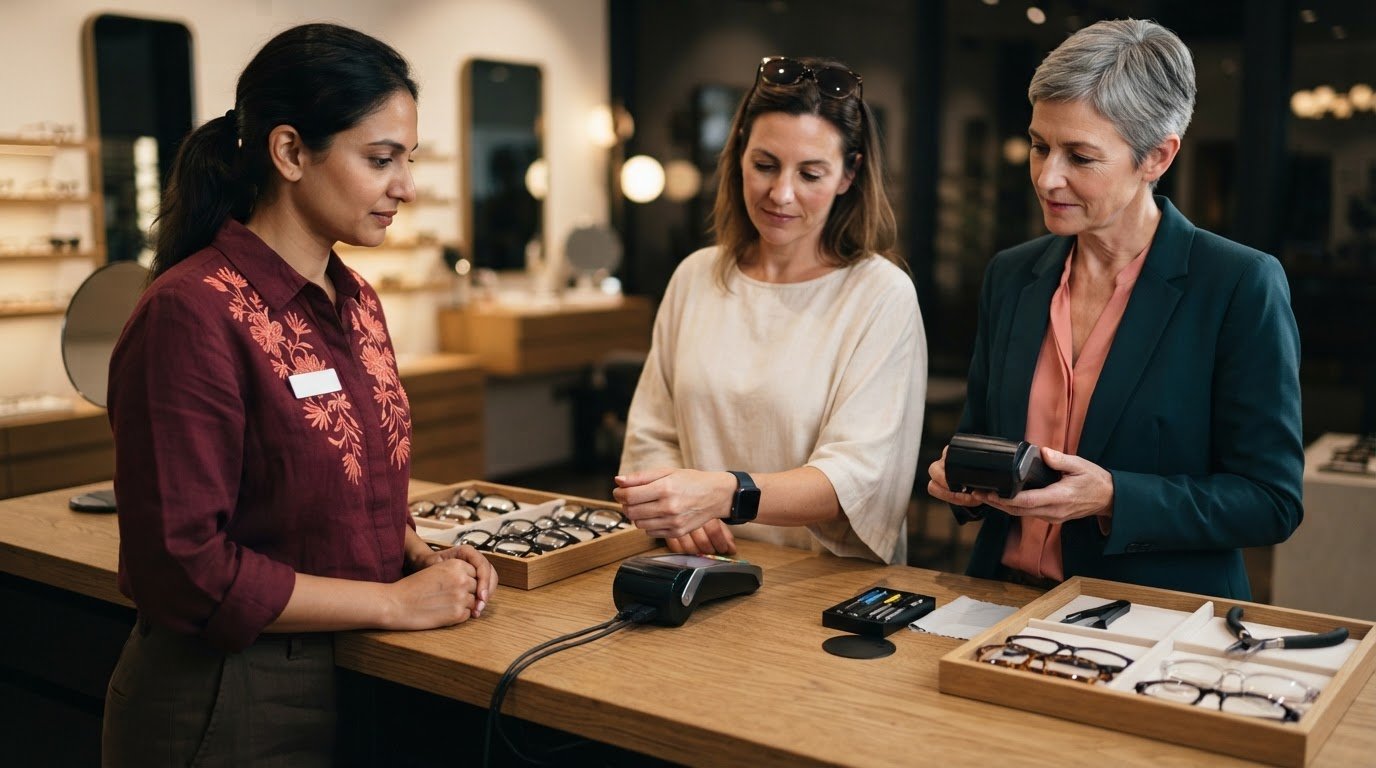
A wallet payment is only as smooth as the checkout behind it. To understand how to accept digital wallet payments in the UAE, connect wallet options to a payment gateway for online sales or use a contactless-enabled POS terminal in store. The wallet sends payment details through the existing processing chain, often using a token instead of exposing card details.
Choosing the setup is only part of the decision. Settlement timing and processing fees depend on the provider and your payment arrangement. Your sales channels, customers’ preferred payment methods, and settlement terms all shape how the setup works.
This guide explains how digital wallets work, what online checkout and POS acceptance involve, and how processing, settlement, and fees can vary. It will help you identify which parts of your payment setup need to work together before you offer wallets to customers.
Key Takeaways
• Match your setup to the sales channel: online checkout needs wallet integration through a secure payment gateway, while in-person acceptance relies on contactless-capable POS equipment.
• Understand how wallets protect payment details and what terminal hardware and connectivity support contactless transactions.
• Compare processing fees and settlement arrangements across channels, including how international payments and currency conversion can affect costs.
• Use PaySelect’s comparison tools to assess gateway, POS and cross-border payment options against your business requirements.
POS terminal and online checkout requirements
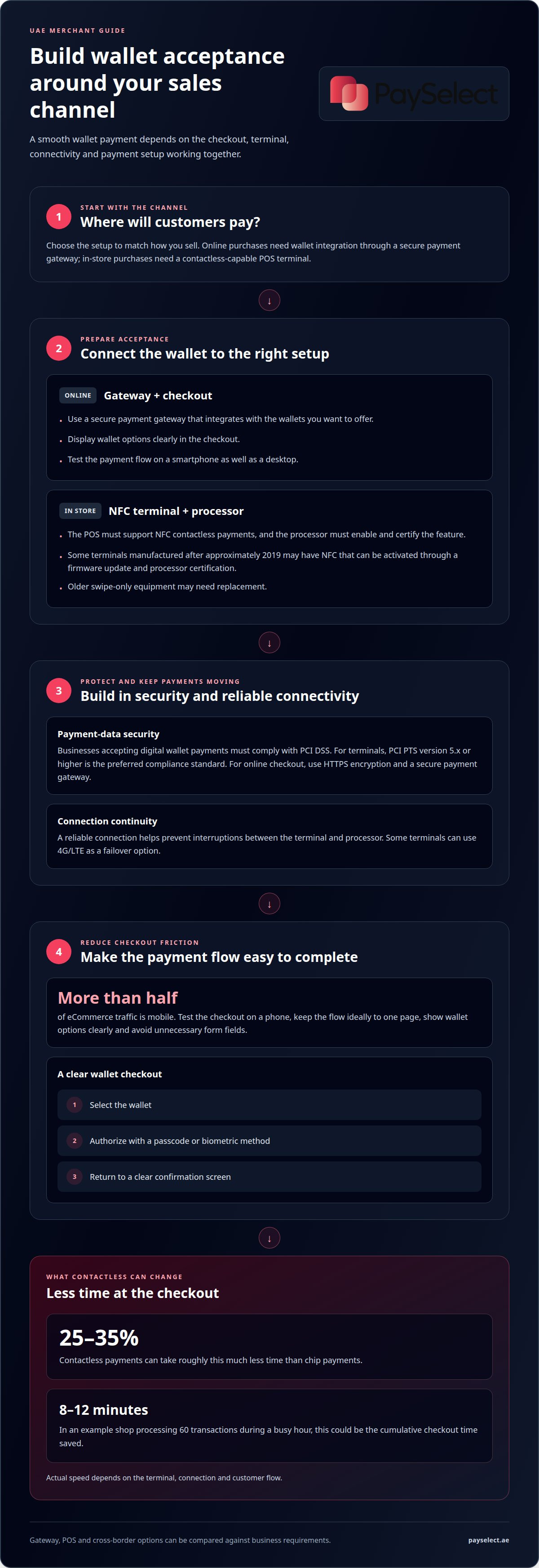
For a UAE retailer deciding how to accept digital wallet payments, the setup depends on the sales channel. In store, the POS terminal needs near-field communication (NFC) to read a phone or wearable tap. Some terminals manufactured after approximately 2019 may have an NFC antenna that can be activated through a firmware update and processor certification. Older swipe-only equipment may require replacement, so terminal capability affects both setup and cost.
Contactless acceptance can improve checkout throughput. Contactless payments can take roughly 25 to 35 percent less time than chip payments. In the example of a shop processing 60 transactions during a busy hour, that could save eight to twelve minutes of cumulative checkout time. Actual speed depends on the terminal, connection and customer flow. A reliable connection helps prevent interruptions; some terminals can use 4G/LTE as a failover option.
Security matters at both the POS and online checkout. Businesses accepting digital wallet payments must comply with PCI DSS payment-data security standards. For terminals, PCI PTS version 5.x or higher is the preferred compliance standard. Online, use HTTPS encryption and a secure payment gateway that supports wallet integration. These measures protect the payment flow while allowing customers to authorize transactions with a passcode or biometric method, such as a fingerprint.
Mobile usability affects whether customers complete an online purchase. More than half of eCommerce traffic is mobile, so test the checkout on a smartphone as well as a desktop. Keep the flow ideally to one page, display wallet payment options clearly, and avoid unnecessary form fields. For example, a shopper paying by wallet should be able to select the method, authorize the transaction, and return to a clear confirmation screen. Businesses handling international customer payments can also consider how cross-border payment arrangements fit their checkout and settlement needs.
What Is A Digital Wallet And How Does It Work?
A digital wallet stores payment methods in an app or browser on a phone, tablet, laptop, smartwatch, or wearable. While merchant checkouts primarily handle card-linked services, the broader ecosystem also includes self-custody cryptocurrency tools such as Lumo Wallet where users keep private keys directly on their device. At checkout, standard retail wallets pass payment information through the existing payment network and processor. Tokenization can replace card details with a transaction-specific token. For in-store contactless payments, the customer taps or holds a device near an NFC-enabled reader. The terminal receives payment data when the device is close to it.
Terminal hardware and connectivity determine whether that tap can be accepted. The POS must support NFC contactless transactions, and its payment processor must enable and certify the feature. Some terminals manufactured after approximately 2019 may have an NFC antenna that can be activated through a firmware update and processor certification. A terminal without contactless hardware needs a different setup. A stable connection lets the terminal communicate with the processor and return an approval or decline. Some terminals use 4G/LTE as a connectivity failover option.
Digital wallet providers also require the checkout or terminal to support their payment method. Online, the payment gateway must integrate with the wallets you want to offer, and the checkout should display them clearly. In store, the reader must accept the wallet’s underlying payment credentials. On a phone, the customer selects a wallet and authorizes payment with a passcode, fingerprint, or face recognition. These steps help confirm that the device owner approved the purchase. A card that cannot be used for online purchases may still work for an in-store tap where contactless payments are supported.
For UAE merchants, PCI DSS is the relevant payment-data security standard for accepting wallet payments. Include the systems that handle payment data in your security planning. To assess how gateway integration fits your channels, use a payment gateway comparison.
Payment processing, settlement and fees
Digital wallet payments rely on existing payment infrastructure, networks, and processors. The wallet changes how customers authorize a purchase, while processing, settlement timing, and commercial terms continue to affect your cash flow.
Choosing a Payment Processor
A payment processor routes transaction details between the wallet, payment network, and merchant account. Choose an arrangement that supports the wallets your customers use, integrates with your checkout or physical POS, and suits your sales markets. Acceptance of a digital wallet, for example, depends on the complete payment setup, not just adding a wallet button. If you sell locally and internationally, compare supported currencies, international card handling, reporting, decline management, and compatibility with your existing systems. These factors shape both the customer experience and the effort needed to reconcile payments.
Processing and Settlement
Processing is the authorization and routing of a payment; settlement is the later transfer of funds to the merchant. Digital wallet payments typically settle within one to three days, depending on the processor. That timing matters when a business plans supplier payments, cash flow, and daily reconciliation. The wallet itself doesn’t set the whole settlement process: the processor and the merchant’s payment arrangement determine how transactions are grouped and reported. For a UAE business with international sales, settlement currencies and cross-border flows can also affect how incoming funds align with operating needs, where specialized financial technology services such as pallapay.com facilitate digital asset exchange and multi-currency transfers.
Payment Processing Costs
Digital wallet processing fees are often comparable to standard card payment fees. The exact cost depends on the merchant’s agreement and transaction mix, so compare the full pricing structure rather than one headline rate. Review how domestic and international cards, currency conversion, refunds, chargebacks, and any rolling reserve affect total costs. A faster wallet checkout can improve payment flow, but it doesn’t automatically reduce processing fees. For example, a merchant taking payments through a digital wallet and physical cards should assess their combined transaction reports to identify fee patterns, declines, and settlement differences. Strong integration and clear reporting make those costs easier to understand.
Accepting wallet payments online, in person, and in-app
Offer wallets through the channels your customers use: your website, physical stores, and mobile app. Each channel needs a payment setup that passes wallet transactions to your processor. A customer might use a wallet linked to a credit or debit card online, then tap the same device at a shop. Display wallet options clearly alongside other payment methods so customers can choose their preferred checkout route.
To accept Samsung Pay in the UAE, use a contactless-enabled POS terminal and a payment arrangement that supports wallet transactions. For online sales, your payment gateway must support the wallet and integrate with your checkout. In a physical store, the customer holds their device near the reader and completes authentication on the device.
In online checkout, display wallet payment as a distinct option before the customer enters payment details. The wallet passes payment information through the gateway, and the customer authorizes the transaction using the wallet’s authentication method. A clear confirmation page should show whether payment succeeded or failed. If a wallet payment is declined, offer a simple way to retry or select another method, such as a physical card.
In a mobile app, wallet integration should fit naturally into the purchase flow. For example, a customer selecting a saved delivery address can then choose a wallet, authenticate, and review the order confirmation. Test successful payments, declines, cancellations, and refunds across each channel. A sale completed in an app may appear differently in reports from a store transaction, so consistent transaction references help reconciliation. To assess payment options for your channels, compare payment solutions for your business.
PaySelect
PaySelect helps UAE businesses compare payment options for accepting digital wallets online and in person. Its comparison tools help you assess payment gateways and POS systems against your business needs, while payment pricing comparison helps clarify provider fees and commercial terms.
If your sales span borders, Cross-border Payment Solution Matching helps you consider how international payment requirements fit your wider setup. This can be useful when wallet acceptance involves multiple channels, overseas customers, or existing arrangements you are reviewing before making changes.
Contact PaySelect to discuss your payment setup and the options relevant to your business.
Make Wallet Acceptance Part of Your Growth Plan
Deciding how to accept digital wallet payments is also an opportunity to review how your payment setup can support future sales. Consider the channels you use now, the markets you want to reach, and how clearly your current arrangements show costs and settlement activity. A setup that works for one checkout may need a different configuration as your business expands.
PaySelect helps businesses assess these choices through its Payment Gateway Comparison Tool, POS System Selection Tool, and Cross-border Payment Solution Matching. Its consulting and advisory support can also help you review existing provider arrangements, assess transaction and settlement reports, identify unnecessary costs, and explore ways to improve fees and terms, even if you do not plan to switch providers.
Use your next payment review to identify what needs to work together and where clearer comparisons or expert advice could help. Discuss your payment options with PaySelect and take a considered next step toward a setup that fits your business.
Frequently Asked Questions
What are digital wallet payments and how do they work for merchants?
Digital wallet purchases are authorized through a customer’s wallet account, with the transaction recorded in the merchant’s payment and order systems. For day-to-day operations, match each payment record to the correct order, refund, or accounting entry. Consistent order references and clear staff procedures help resolve queries without relying on a customer’s device or wallet history.
How can a business accept digital wallet payments in the UAE?
A business can offer digital wallet payments when its payment arrangement supports them for the relevant sales channel. Availability depends on the merchant’s processing setup and the wallet’s acceptance within that arrangement, not simply on the customer’s phone. Before launch, include wallet transactions in reporting and refund procedures so finance and customer service teams can manage them consistently.
What payment gateway or POS terminal is needed to accept digital wallet payments?
The right gateway or terminal supports the wallet method and fits your operating needs. Compare more than acceptance: assess how each option handles refunds, transaction references, reporting, and reconciliation across sales channels. For example, a retailer with online orders and shop sales benefits from reports that distinguish channel activity without requiring staff to match every payment manually.
What are the steps to enable wallet payments for an online store in the UAE?
Plan operational details alongside the technical connection. Decide how wallet transactions will appear in order records, who handles failed or duplicate orders, and how refunds reach the original payment method. Then run sample orders through your usual fulfilment and accounting processes. This can uncover gaps, such as an order marked paid in one system but still awaiting confirmation in another.
What are the steps to accept wallet payments in a physical shop?
Prepare store staff to recognize wallet transactions on receipts and in daily reports, and give them a clear process for customer questions and refunds. Include wallet sales in till reconciliation so totals align with POS records and settlement reports. If your shop has several checkout points, use consistent procedures across counters to make mismatches easier to investigate and distinguish wallet purchases from other sales.
What security, fraud, and chargeback risks should merchants consider when accepting digital wallets?
Wallet use does not prevent disputes about goods, delivery, or refunds. Link customer-service records to orders, apply the same refund controls across payment methods, and limit access to payment and order information to staff who need it. Review disputes for recurring operational causes, such as unclear delivery updates or inconsistent refund handling, and improve those processes to reduce avoidable friction.
Disclaimer
This content is for informational purposes only and should not be considered financial, legal, or regulatory advice. Payment provider availability, pricing, and approval processes vary depending on individual business circumstances. PaySelect does not guarantee provider acceptance or specific outcomes. Businesses should conduct their own due diligence before entering into any agreements.
Empowering businesses to achieve greater growth
