


A chargeback reason code is a clue, not a verdict. It’s a 2- to 4-digit alphanumeric code the issuing bank provides to identify the stated reason for a payment dispute. To understand what a chargeback reason code is in practice, read it as the dispute category, then compare it with the transaction record and customer history.
A code can point to fraud, an authorisation issue, a processing error or a customer dispute, but it doesn’t explain every detail on its own. A duplicate-processing code, for example, signals a different issue from a claim that a purchase was unrecognised. That distinction matters because the code helps frame the dispute and identify what evidence may be relevant.
This guide explains how payment networks format reason codes, what common codes indicate, and how to interpret clues such as duplicate processing or payment by another means. You’ll also learn why the same payment problem can be classified differently across networks, helping you move from code to cause with greater clarity.
Key Takeaways
• Read the reason code as the dispute category, not a complete explanation of what happened.
• Visa codes group disputes into fraud, authorisation, processing errors and consumer disputes, giving you a starting point for investigation.
• Visa code 12.6 can indicate duplicate processing or payment by other means; compare the transaction records to understand the payment trail.
• Interpret the code alongside the transaction details and customer communication to identify the underlying issue and the relevant evidence.
What Can Reason Codes Tell You?
A reason code identifies the type of payment issue raised, not its full cause. Read it alongside the dispute notice and transaction details to understand the claim.
Fraud and Transaction Dispute Categories
A dispute category groups a cardholder’s claim according to the payment issue reported.
Common categories include suspected fraud, missing authorisation, processing errors and customer complaints. An unfamiliar online purchase raises a different concern from a charge for an order the customer says never arrived. A claim about defective goods or recurring billing after cancellation points to a service or billing issue. These distinctions help a business focus its review on the reported problem.
Patterns can also guide prevention. Repeated claims about unfamiliar transactions may prompt a review of fraud controls, while recurring processing complaints may point to a need to examine transaction handling. Look for common claim types and the steps or payment flows they involve, or consult payment specialists like PenguinPay to ensure card payment and EPOS setups are configured to minimise processing errors.
Network-Specific Codes and Deadlines
Network-specific codes are classifications that vary in format and description across card networks.
One network may use a decimal format, while another uses a four-digit number or an alphanumeric label. Similar customer concerns can therefore have different code formats and descriptions. Read the code with its dispute notice, and don’t interpret it using another network’s code guide.
Response windows depend on the dispute process and the notice received. Follow the deadline shown in the case information rather than assuming there is one universal timeframe. In the UAE, interpret the code in the context of the card network and transaction involved.
Dispute Mistakes and Risks
A dispute response falls short when it fails to address the claim or support its explanation.
Start by matching the stated issue to the relevant transaction and records. For a delivery complaint, order and delivery records can clarify the fulfilment history. For a billing concern, transaction and cancellation records can show how the charge relates to the customer’s account. Keep your explanation focused and the documentation consistent.
Common risks include treating a code as proof of what happened, relying on unrelated records, or missing the stated response deadline. Avoid sending the same generic response for different claim types. Reviewing repeated patterns can also reveal where payment processes need closer attention.
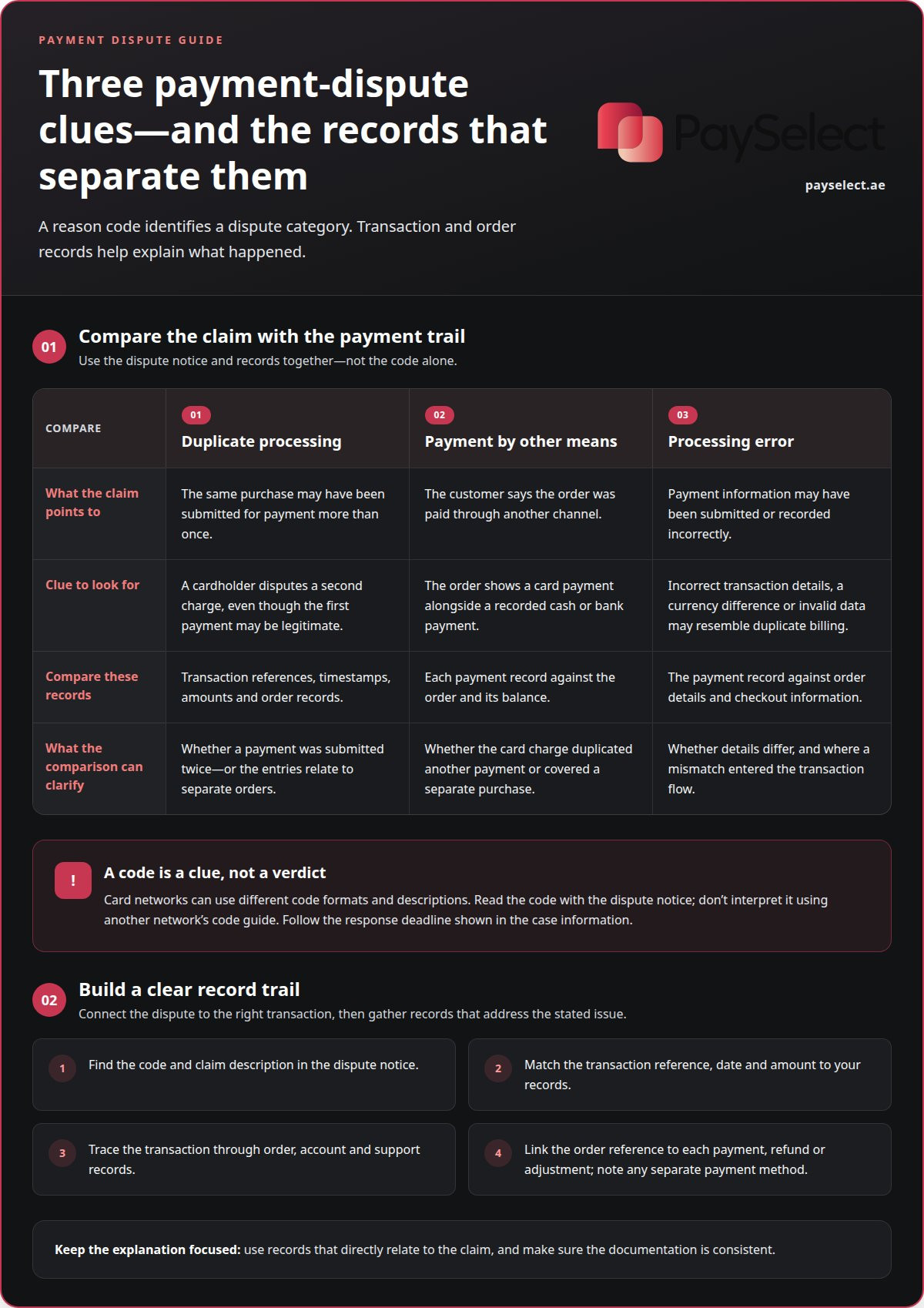
Duplicate processing and payment by other means
Duplicate processing occurs when the same purchase is submitted for payment more than once. A cardholder may dispute a second charge even if the first payment was legitimate. Compare transaction references, timestamps, amounts and order records to determine whether the entries relate to one purchase or separate orders. Matching details can help distinguish a repeated submission from two valid payments.
Payment by other means is a claim that the customer paid for an order through another channel. For example, an order might show a card payment alongside a recorded cash or bank payment. Match each payment record to the order and its balance. This can clarify whether the disputed card transaction duplicated another payment or covered a separate purchase.
A processing error is a problem with how payment information is submitted or recorded. Incorrect transaction details, currency differences or invalid data can create a dispute that resembles duplicate billing. Compare the payment record with the order details and checkout information. If the records show different amounts or currencies, trace where the mismatch entered the transaction flow.
Card networks may organise processing disputes differently, so use the code description in the dispute notice rather than assuming a shared format. For an unrecognised transaction claim, first establish which order and customer record the payment belongs to. Then gather records that directly connect the transaction to that order.
Build a clear record trail: link the order reference to each payment, refund or adjustment, and note any separate payment method. Consistent records make it easier to explain whether a charge was repeated or applied correctly. Businesses reviewing payment flows can use a payment gateway comparison to assess options against their reconciliation needs.
Interpreting the reason behind a reason code
A reason code describes the dispute category, while the transaction history helps explain what happened. Interpret both together before deciding what the records show.
Reason Code Mechanics
Reason code mechanics connect a dispute category with the issue the customer says occurred.
The same broad concern can involve different events. A renewal dispute, for example, might involve a cancellation request, a later billing date or confusion about the service period. Separate these possibilities by building a timeline from account activity, customer messages and payment records. The sequence matters: a cancellation request before renewal tells a different story from one made afterward.
A refund-related claim also needs careful interpretation. A refund may have been requested, approved, submitted or completed, and these stages aren’t the same. Compare the refund status with the original transaction and the customer’s account history. This helps distinguish a processing delay from a refund that was never initiated.
Reason Code Identification
Reason code identification means finding the dispute label and connecting it to the transaction under review.
Find the code and claim description in the dispute notice, then match the transaction reference, date and amount to your records. Trace that reference through order, account and support records to identify the relevant event. This reduces the risk of responding about the wrong purchase when a customer has several transactions.
Organise evidence around the claim’s timeline. For a cancellation issue, show the request and subsequent account activity. For a refund concern, show the refund’s recorded status and its link to the original payment. For a service complaint, connect the purchase to the service delivered and relevant customer communications. Keep the explanation direct, use each record to support a specific point, and submit it by the deadline in the dispute notice.
How do chargeback reason codes work?
A chargeback reason code is a 2- to 4-digit alphanumeric label that identifies the issuer’s stated dispute reason. It classifies the claim and helps indicate response deadlines, liability rules and the evidence type the issuer may accept. Treat it as a guide to the dispute, not a complete account of the transaction.
After a cardholder disputes a payment, the issuing bank assigns a code and sends the dispute through the payment process. The merchant receives the notice through the relevant payment channel, then reviews the code alongside the transaction details. The code directs attention to the claim, while transaction records help explain what occurred.
Visa formats dispute condition codes as a category number followed by a condition number. For example, 10.4 means other fraud in a card-absent environment. Its category numbers group disputes into fraud, authorisation, processing errors and consumer disputes. The format connects a broad issue to a more specific condition, helping merchants organise their response.
Mastercard uses four-digit numeric codes, including 4837 for transactions processed without valid cardholder authorisation. Its categories follow a four-group structure equivalent to Visa’s, though individual code meanings differ. American Express uses its own alphanumeric system, including codes beginning with “F” for fraud-related disputes. Discover’s AP code identifies authorisation noncompliance.
These differences matter because codes aren’t interchangeable across networks. First identify the network and exact code, then read the associated claim and match relevant records. For example, an authorisation claim calls for records that address approval, while a non-receipt claim needs transaction-specific delivery information. A response based on the wrong network meaning may fail to address the issuer’s stated reason.
Keep the dispute notice, transaction reference and supporting records together. This creates a clear path from the assigned code to your explanation. The code classifies the issue; the evidence shows how the transaction relates to the claim.
PaySelect
PaySelect helps businesses assess whether their payment setup fits their transaction flows and operating needs. Chargeback patterns can highlight friction, such as unclear transaction records or payment processes that are difficult to reconcile. Reviewing the setup can help identify where systems and business requirements may be misaligned.
PaySelect’s comparison and consulting options help businesses assess payment gateways, pricing, cross-border requirements and payment infrastructure. Relevant considerations include industry, transaction volume and international needs. This can be useful when recurring payment disputes prompt a broader review of how payments are accepted and recorded, rather than treating each dispute as an isolated event.
For an informed review of your payment setup, contact PaySelect.
Turn dispute insight into a stronger payment setup
A pattern of disputes can do more than guide an individual response. It can reveal where payment operations deserve closer review, from checkout acceptance to transaction reporting and cross-border flows. Understanding what a chargeback reason code signals gives your team a starting point, not an automatic reason to change systems.
When recurring issues point to friction in your payment setup, PaySelect can help assess options against your business requirements. Its Payment Gateway Comparison Tool and POS System Selection Tool support evaluation of payment channels, while Cross-border Payment Solution Matching helps businesses assess international needs. The aim is to identify a setup aligned with how your business accepts payments and serves customers.
Define the operational issue first, then consider whether your current setup supports clear records and consistent payment handling. Modern payment solutions like Dojo help businesses keep transparent transaction logs and maintain reliable processing across in-person and online sales. A considered review can turn dispute insights into a more informed decision about your payments infrastructure.
Ready to explore your next step? Discuss your payment setup with PaySelect and move forward with clarity.
Frequently Asked Questions
What is a Reason Code?
A reason code is a label used to classify why an event or transaction is being questioned. In card payments, the issuing bank uses it to describe the cardholder’s stated dispute category. A claim may concern an unfamiliar purchase, a cancelled service or a payment the cardholder says they didn’t receive. The label helps distinguish these issues.
What is a chargeback reason code?
A chargeback reason code is the network-specific label attached to a cardholder’s dispute. It helps a business understand the claim and organise a relevant response. For instance, if a customer reports an unfamiliar subscription charge, the code can help distinguish that concern from a complaint about a delivered item. Read it alongside the notice and transaction details.
What does each chargeback reason code mean?
Each code describes a specific dispute condition within a card network’s system, so its meaning depends on the network and exact code. Don’t interpret a number alone or assume the same format applies everywhere. Find the code on the dispute notice, identify its network, then read the accompanying claim. Together, these details clarify which transaction or customer concern is under review.
Disclaimer
This content is for informational purposes only and should not be considered financial, legal, or regulatory advice. Payment provider availability, pricing, and approval processes vary depending on individual business circumstances. PaySelect does not guarantee provider acceptance or specific outcomes. Businesses should conduct their own due diligence before entering into any agreements.
Empowering businesses to achieve greater growth
