Comparing Flat-Rate vs Interchange-Plus Pricing: Which Fits Your Business?

A simple processing rate can be easier to budget for, but it may not make your costs easier to understand. When comparing flat-rate vs interchange-plus pricing, UAE businesses need to look beyond the headline rate and check what each quote includes, how fees are presented, and how the pricing structure fits their transactions.
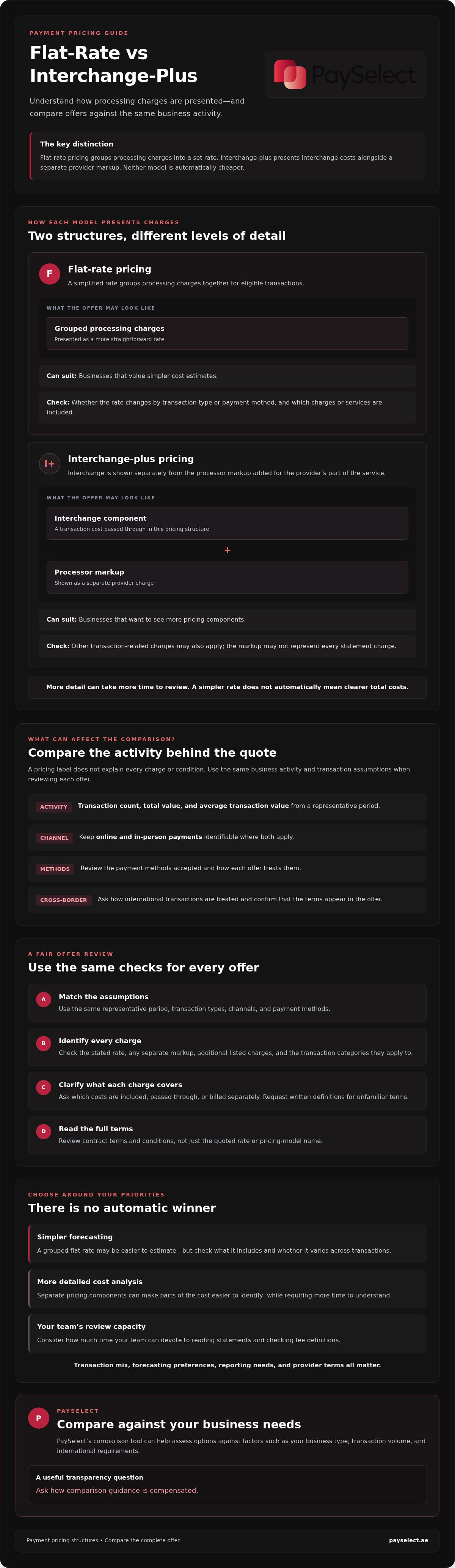
It’s reasonable to want both predictable costs and clear reporting. Flat-rate pricing groups processing charges into a set rate, while interchange-plus pricing presents interchange costs alongside a separate provider markup. One may be simpler to review; the other may show more pricing components, but require more time to understand. Neither model is automatically the better choice.
This guide explains how the two structures work and how to compare offers using consistent transaction details. Transaction patterns, forecasting preferences, and reporting needs can all shape your decision. PaySelect’s comparison tool can help match options to factors such as your industry, transaction volume, and international requirements. As you assess comparison guidance, also ask how it is compensated.
Key Takeaways
• When comparing flat-rate vs interchange-plus pricing, check how each offer presents processing charges and what its quoted rate includes.
• Review how transaction mix and payment methods affect each offer, and confirm how providers define their fees.
• Compare offers using the same transaction assumptions, itemised charges, and contract terms.
• Choose according to your priorities: simpler forecasting, more detailed cost analysis, or the time your team can devote to reviewing statements.
• PaySelect can help compare options against your business type, transaction volume, and cross-border needs. Ask how comparison guidance is compensated.
Flat-Rate vs Interchange-Plus Pricing: What Each Model Means
Flat-rate and interchange-plus pricing structure processing charges differently. To compare them fairly, look beyond the model’s name. Identify each offer’s components, how charges are calculated, and which transaction types they apply to. The label alone won’t tell you which offer will cost your business less.
Flat-rate pricing can make costs easier to forecast, while interchange-plus can make individual fee components easier to see. That difference in presentation matters, but neither model guarantees a lower total cost. Your transaction mix and the provider’s specific terms affect what you pay.
How flat-rate payment pricing is structured
With flat-rate pricing, a provider presents a simplified rate structure for eligible transactions. Instead of displaying every underlying processing component separately in the quoted rate, the offer groups charges into a more straightforward presentation. This can make costs easier to estimate, but the details still matter.
Check whether the rate changes by transaction type or payment method, such as in-person versus online payments. Confirm which charges and services it includes, and whether other fees may appear separately. Providers may define or package a flat rate differently, so review the written terms rather than assuming the label tells the whole story.
How interchange-plus pricing is structured
Interchange-plus pricing shows the interchange component separately from a processor markup. Interchange is a transaction cost passed through as part of this pricing structure. The provider’s markup appears as an additional charge, making that part of the pricing easier to identify.
The processor markup is the amount the processor adds for its part of the service. It isn’t necessarily the only cost on a merchant statement. Other transaction-related charges may also apply, and the underlying components can vary depending on the offer and transaction details. Ask the provider to define each line item and confirm which charges are included, passed through, or billed separately.
In practice, comparing flat-rate vs interchange-plus pricing means comparing the full offer against your own payment activity, not choosing based on a pricing label. Use the same transaction types and payment methods to review each option. Then check the written terms and fee definitions to understand how charges are presented and what may appear on your statement.
What Makes Flat-Rate and Interchange-Plus Costs Change?
A pricing model describes how processing charges are presented. It doesn’t necessarily cover every charge in a payment services agreement. Review the full offer to see which charges are included in the quoted rate, which are shown separately, and what conditions apply. Providers may use similar terms differently, so ask for definitions in writing.
Your transaction activity also shapes a useful comparison. If your business accepts payments through different channels or from international customers, check how each offer treats those transactions. Under interchange-plus, underlying transaction components and the processor markup are presented separately, but the exact details depend on the offer. Confirm how each provider defines and applies its charges instead of assuming the terms are identical.
Which transaction details influence a comparison?
Use records from a representative period and collect the same details for each offer: transaction count, total value, average transaction value, sales channel, and payment methods. If you accept payments both online and in person, keep those channels identifiable in your records. This lets you review each offer against the same business activity rather than comparing different assumptions.
International transactions may have different terms. Ask each provider how those transactions are treated and make sure the answer is reflected in the offer. Don’t apply one assumed cost to every transaction. If gateway options are part of your review, PaySelect’s payment gateway comparison options can help you assess choices against your business requirements.
How to read the fee components in an offer
Check the stated rate, any separately stated processor markup, the transaction categories each charge applies to, and any additional charges listed in the agreement. Ask the provider to explain unfamiliar terms and confirm what each quoted charge covers. Even an itemised offer needs careful review: a stated markup may not represent every charge on the statement.
Verify the rate, markup, applicable transaction categories, separately listed charges, and the services each charge covers. Then compare offers using the same period, transaction volume, average transaction value, and payment mix. This makes the assumptions visible and helps you identify differences without treating a headline rate as the full cost.
Flat-Rate vs Interchange-Plus: Compare the Practical Trade-Offs
The main difference is how much pricing detail you want to manage. A simplified rate can make routine forecasting easier, while itemised pricing can help you inspect the parts of a charge. Neither format is automatically cheaper. Your transaction profile, offer terms, and separately listed charges determine how useful each option is for your business.
| Comparison point | Flat-rate | Interchange-plus |
|---|---|---|
| Pricing presentation | Grouped into a simpler rate structure. | Underlying components and processor markup are shown separately. |
| Cost visibility | Fewer components may be visible in the quoted rate. | More detail may be available, depending on the offer and statement. |
| Predictability | Can support straightforward forecasting if the rate applies to your transaction types. | Costs can vary with transaction components, so forecasts may need more detail. |
| Review effort | May take less effort to review, but check what the rate covers. | May require more time to understand and reconcile individual charges. |
When a simpler rate structure may be useful
A business that prioritises quick statement reviews and uncomplicated internal forecasts may value a simplified rate. Before relying on it, confirm whether the rate applies across your actual transaction mix, including the payment methods and channels you use. If certain transactions have different terms, the headline rate may not describe the whole offer. Simplicity can also mean less visibility into individual pricing components.
When itemised pricing may be useful
Itemised pricing may suit a business that wants to examine separate components and has the capacity to review detailed statements. That visibility can support closer analysis, but it isn’t a promise of savings. Meaningful comparisons require consistent transaction records, clear fee definitions, and an understanding of which charges apply to each category. Consider whether the person responsible for payments can review the details regularly.
Use these trade-offs to clarify what your team needs from a pricing structure: simpler forecasts, more detailed cost review, or a workable balance between the two. Ask each provider how its offer applies to your business activity, then check the written terms before deciding.
PaySelect’s comparison tool considers factors such as industry, transaction volume, and international requirements. Explore payment gateway comparison options to assess alternatives against your business needs, without assuming that one pricing model is right for every merchant.
How to Choose a Pricing Model for Your Business
The right choice depends on your transactions and the time your team can devote to reviewing costs. Comparing flat-rate vs interchange-plus pricing works best when you use your own records, decide what matters most, and assess offers on the same basis. This process can help turn the comparison into a practical decision.
Use your transaction profile to frame the decision
Start with a representative period and gather transaction volumes, values, channels, payment methods, and any international requirements. Note who will review payment statements and whether your team can regularly examine individual fee components. Business-specific records provide a more relevant basis for comparison than generic assumptions or industry averages.
Gather records.
Use the same reporting period for transaction counts, values, payment channels, and payment methods. Include international activity if it’s part of your business.
Define priorities.
If straightforward forecasting and simpler reviews matter most, check whether a flat-rate offer clearly covers your transaction mix. If you need to examine pricing components and can review detailed statements, assess the itemisation and definitions in an interchange-plus offer.
Request comparable offers.
Give each provider the same transaction information and ask for terms based on the same assumptions. Request a written explanation of included services, fee components, applicable transaction categories, and any conditions.
Review the terms.
Check that the quoted structure applies to the payment types you use. Clarify unclear terminology and compare the full offer, not only its headline rate.
For businesses with international requirements, treat cross-border activity as a distinct part of the review. Ask providers which terms apply to those transactions and how they’re reflected in the offer. PaySelect’s cross-border payment solutions comparison can help you consider options against your international requirements.
Compare offers on consistent terms
Keep the comparison like for like: use the same reporting period, transaction profile, and assumptions for each provider. A simplified rate may suit a team prioritising easier forecasts, while itemised pricing may better support detailed analysis if someone can interpret the statement. Neither format guarantees a lower cost. The useful choice is the one your business can understand, review, and manage using the written terms.
PaySelect’s comparison tool considers business type, transaction volume, and international requirements. Compare payment gateway options against your requirements and review the provider terms before deciding. When using comparison guidance, ask how referral compensation works.
Review a Payment Pricing Offer and Decide Your Next Step
Before accepting an offer, check that you understand how its pricing works in practice, not just how the rate is described. Comparing flat-rate vs interchange-plus pricing is most useful when every offer uses the same assumptions and the provider explains unclear terms in writing.
Questions to resolve before selecting an offer
Use this checklist to review the quote and the agreement together:
Definitions
What does each pricing term mean, and how is the processor markup described?
Coverage
Which transaction types, payment methods, channels, and services does the quoted pricing cover?
Assumptions
Does the offer use transaction details that reflect your business and the same reporting period as other quotes?
Itemised charges
Which charges appear separately, and what does each one cover?
Conditions
How might a change in transaction mix or international requirements affect the terms?
Statements and contract
Can your team understand and monitor the resulting statements, and do the written contract terms match the quote?
If a term is unclear, ask the provider to explain it in writing before making a decision. Keep that explanation with the agreement so you can check the terms and compare offers on a consistent basis.
How PaySelect can support the comparison
PaySelect is a comparison and advisory platform, not a payment processor. Its comparison tool considers factors such as industry, transaction volume, and international requirements to help businesses assess options against their needs. PaySelect may receive success-based fees from selected providers, so include that compensation model in your assessment of comparison guidance.
For larger organizations seeking bespoke payment infrastructure guidance, PaySelect also offers fixed-fee advisory. Whether you use a comparison tool or review offers directly, base your decision on the written terms, your transaction profile, and your team’s ability to review costs.
Ready to assess options against your business requirements? Compare payment options for your business.
Make Your Next Pricing Review Count
There’s no universal winner in the flat-rate versus interchange-plus decision. Comparing flat-rate vs interchange-plus pricing means weighing how charges are presented against your transaction profile, forecasting preferences, and capacity to review statements. A consistent comparison of transaction assumptions and written terms can show which offer is easier for your business to understand and manage.
PaySelect’s comparison tool matches merchants with options using factors such as industry, transaction volume, and international requirements. Larger organizations can also explore its fixed-fee payment advisory and cost optimization services for guidance on payment infrastructure.
Ready to assess options against your business needs? Compare payment options for your business. Start with consistent assumptions, check the written terms, and use PaySelect’s comparison tool to assess options against your requirements.
Frequently Asked Questions
What is the difference between flat-rate and interchange-plus pricing?
Flat-rate pricing presents processing charges in a simplified rate structure for eligible transactions. Interchange-plus pricing shows interchange costs separately from a processor markup. The level of detail and which charges are included can vary by provider, so check each offer’s definitions and terms. In short, flat-rate groups charges for simpler presentation, while interchange-plus separates more components for review.
Is interchange-plus pricing always cheaper than flat-rate pricing?
No. Interchange-plus isn’t automatically cheaper. The total depends on your transaction profile, the provider’s markup, other applicable charges, and the contract terms. A flat-rate offer may be easier to understand, while itemised pricing may reveal more components, but neither feature proves the total cost will be lower. Compare both offers using the same transaction records and assumptions before deciding which one fits your business.
Can a small business use interchange-plus pricing?
A small business can consider interchange-plus if a provider offers it and the terms suit its needs. The key question is whether the business can review the more detailed charges and statements. Gather your transaction records, ask the provider to explain each fee, and check whether the pricing applies to your payment methods and channels. Choose based on the full offer and your team’s capacity, not business size alone.
How do I compare flat-rate and interchange-plus offers fairly?
Compare both offers using the same reporting period, transaction volume, average transaction value, payment methods, and sales channels. Ask each provider to state in writing which transaction categories and services the quote covers, and identify any separately listed charges or conditions. Comparing flat-rate vs interchange-plus pricing on consistent assumptions makes differences easier to assess, while checking the full agreement helps prevent a headline rate from driving the decision.
What information do I need to compare payment pricing models?
Collect transaction counts and values from a representative period, along with payment methods and channels, such as online or in-person sales. Include international transaction requirements if they apply to your business. Keep the reporting period consistent across all offers. These records help providers base their quotes on your activity and give you a clearer way to check how each offer treats your transaction mix.
Does interchange-plus pricing make payment costs harder to predict?
It can require more detailed forecasting because underlying transaction components may vary, while the processor markup is listed separately. That doesn’t make forecasting impossible. Use past transaction records, understand how the offer defines each component, and ask the provider how different transaction types are reflected in statements. If your team prefers a simpler forecast, compare that benefit with the visibility and review effort offered by each pricing structure.
What should I ask a payment provider about its pricing?
Ask which transactions and services the quote covers, how the rate and any markup are defined, and what charges may appear separately. Confirm whether payment methods, channels, or international transactions have different terms. Ask how changes to your transaction mix could affect the offer, and request written explanations for unclear terminology. Finally, check that the agreement matches the quote and that your team can interpret the statements.
Disclaimer
This content is for informational purposes only and should not be considered financial, legal, or regulatory advice. Payment provider availability, pricing, and approval processes vary depending on individual business circumstances. PaySelect does not guarantee provider acceptance or specific outcomes. Businesses should conduct their own due diligence before entering into any agreements.
Empowering businesses to achieve greater growth