


The payment label matters less than the schedule behind it. A deposit is an upfront partial payment, typically 20-50% of an order, with the balance collected later; installments divide the total into agreed payments over time. To decide how to handle partial payments and deposits, set clear amounts, due dates and conditions for collecting the balance.
A deposit or staged payment can make a large purchase or project easier for customers to commit to, while giving your business a clearer plan for incoming cash. The key decisions are whether to charge a fixed amount or a percentage, when each payment is due, and how to collect it without relying on manual follow-up. This guide explains how partial payments, deposits and installments differ, how to set a workable schedule, and how payment tools can help manage balance collection. It also covers how to assess payment options for a UAE business.
Key Takeaways
• Offer full payment or a deposit where it fits the purchase, and make the remaining balance and due date clear.
• Choose fixed amounts for predictable milestones or percentages when payments should scale with the total.
• Use scheduled reminders and balance-collection workflows to reduce manual follow-up and keep payment timing visible.
• Distinguish a deposit from installments by its purpose and schedule, then compare payment options that support your business needs.
What Are Partial Payments?
A partial payment covers some of the agreed total, leaving a balance due under a defined schedule. To decide how to handle partial payments and deposits, specify the amount due upfront and when the remainder must be paid.
Offer customers a choice between full payment and an upfront deposit when both suit the sale. For example, a customer ordering a made-to-order item could pay a deposit before production, then settle the balance later. Before checkout, show the total price, amount due now, remaining balance and payment trigger. Explain how cancellations affect payments, including any refund conditions, before the customer commits.
For UAE VAT, consider the underlying supply and when the relevant tax point arises. Calling a payment a deposit does not, by itself, determine its VAT treatment. Make the invoice clear about amounts received and any applicable tax.
For accounting purposes, receiving a deposit does not automatically mean the business has earned revenue. Revenue recognition depends on fulfilling the agreed goods or services under the applicable accounting policy. Handling partial payments and deposits therefore means tracking cash received separately from work still owed.
Partial-payment account status
Mark the customer account as partially paid, showing the amount received, outstanding balance and next due date. Link each receipt to its order so staff can distinguish collected funds from the unpaid balance. Review the status when a payment arrives, a due date changes or an order is cancelled. This creates a clear record for finance and customer support.
Deposit agreement and invoice terms
Include the total price, deposit amount, balance, due dates, payment method, and cancellation terms in the agreement or invoice. Explain whether the deposit is refundable or retained in each stated situation. After a payment, issue a receipt and update the account record. For UAE customers paying from abroad, suitable cross-border payment solutions can support the payment journey.
Fixed-amount and percentage-based payments
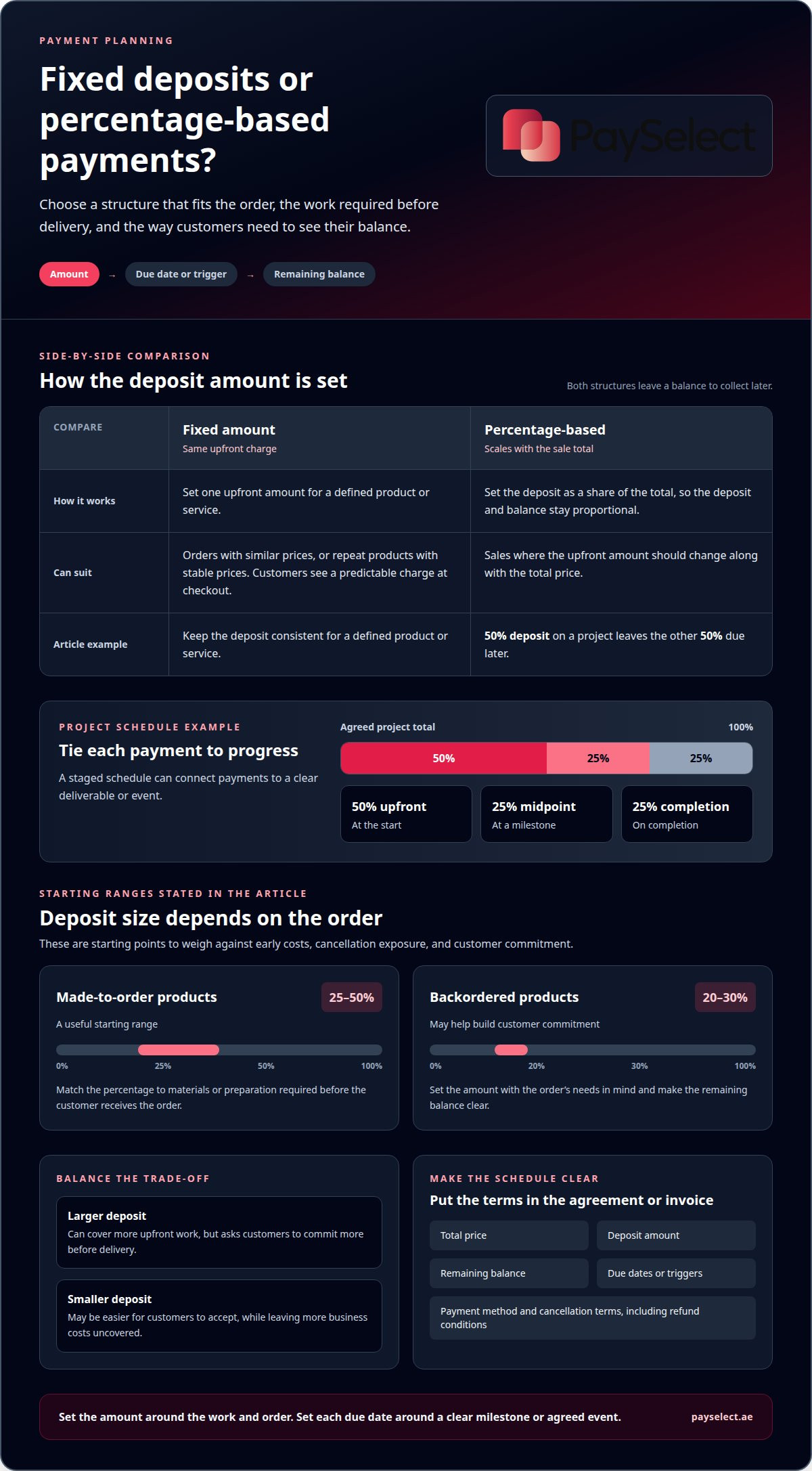
Choose a payment structure that fits the order and the work required before delivery. A fixed amount keeps the upfront charge consistent, while a percentage varies with the total.
Fixed and percentage-based deposit methods
A fixed deposit sets the same upfront amount for a defined product or service. It can suit orders with similar prices, since customers see a predictable charge at checkout. A percentage deposit changes with the sale total, so the deposit and remaining balance stay proportional. For example, a 50% deposit on a project leaves the other half due later.
For project work, a staged schedule can link payments to progress: collect 50% upfront, 25% at a midpoint or milestone, and 25% on completion. In a staged payment structure, the amount owed at any point depends on the agreed schedule and payments already made. Tie each due date to a clear deliverable or event.
Choosing a deposit amount
Set the amount by weighing early costs, cancellation exposure, and how much commitment the order needs. For made-to-order products, a deposit of 25-50% is a useful starting range. Backordered products may use 20-30% to build customer commitment. Match the percentage to the materials or preparation required before the customer receives the order.
Test the proposed amount against what customers are likely to accept. A larger deposit can cover more upfront work, but asks customers to commit more before delivery. A smaller deposit may be easier to accept, while leaving more of the business’s costs uncovered. State the amount and balance clearly before payment, and apply the schedule consistently to comparable orders.
Base the structure on actual milestones, not habit. For a project with a costly initial phase, set the upfront amount to cover that work, then schedule later payments around measurable progress. For repeat products with stable prices, a fixed deposit can simplify checkout. Record the reasoning so staff can use the same approach for similar sales and explain the amount consistently.
Automating balance collection
Automation can turn a recorded payment schedule into timely balance requests and reminders. Link each customer, invoice and order in one system, then enter the remaining amount and collection date when recording the initial payment. This gives finance and customer service a shared view instead of relying on separate notes or calendar alerts.
• Record the amount received and outstanding balance against the correct invoice.
• Set a collection trigger, such as a delivery milestone or agreed due date.
• Schedule a reminder before payment is due, then follow up if the balance remains unpaid.
• Update the account after payment, refund, cancellation, or an agreed schedule change.
Make each message clear about the customer’s next action. Include the order reference, balance due, due date and payment instructions. For example, a reminder can say that the final balance is due when the product is ready for dispatch. Avoid generic requests that leave the customer unsure which purchase or amount is involved.
Plan for exceptions. If a payment fails, flag the account for follow-up rather than marking it complete. If a customer changes a milestone, revise the due date and notify them before sending the next message. Recording each change helps prevent duplicate requests and disputes about the agreed schedule.
Reconcile completed payments against invoices regularly. Compare the payment record with the amount due, then close the balance only after the account reflects receipt. In one example, a customer paid an overdue balance within 48 hours of receiving a reminder. Timely prompts can help customers act without repeated manual chasing.
Before activating automation, test the full sequence with a sample order. Check that the initial receipt, balance notice and overdue follow-up show the correct customer and invoice details. Review failed-payment and cancellation cases as well. The workflow should pause or change when the sale changes, rather than sending a request based on an outdated schedule.
Differences between partial payments, deposits, and installments
These terms describe different parts of a payment arrangement and are not interchangeable. The key distinction is whether a payment is an upfront commitment or one part of a scheduled series.
When invoicing a deposit or installment, state the total agreed amount, the payment currently due and the remaining balance. Include the due date, order or project reference, and schedule for later payments so the customer can match each invoice to the agreement.
Payment type distinctions
A partial payment is any payment smaller than the full amount owed. A deposit is a specific partial payment collected upfront to secure an order or begin work. Installments divide the total into scheduled payments, such as six equal monthly amounts for one engagement. A deposit can be the first payment in an installment plan, but the terms should explain its purpose.
Use the label that matches the arrangement. If a customer pays an upfront amount and the rest at delivery, describe the first amount as a deposit. If the customer pays at regular intervals, call the later payments installments. This distinction clarifies the timing and purpose in the agreement, account record and invoice.
Deposit and installment invoicing
For a deposit invoice, identify the order, show the full agreed total, list the deposit due now, and state the balance and its due date or trigger. For installment invoices, identify the payment sequence and the current installment, such as “third payment,” alongside its amount and due date.
Keep the invoice record connected to the original agreement. After each payment, update the amount paid and remaining balance, then issue the next invoice according to the schedule. If a milestone changes, document the revised date and amount before sending another request. Clear records help both sides see what has been paid and what remains.
Use consistent labels across invoices and customer accounts. Customers should be able to distinguish a deposit from a later installment without having to interpret internal accounting terms. For UAE businesses, show amounts in AED and ensure the invoice total, payment received and outstanding balance reconcile. The practical rule is simple: explain each payment’s purpose, timing and effect on the balance.
PaySelect: Payment Gateway Comparison Tool
PaySelect helps businesses compare payment gateway options when they need a payment setup that supports checkout and balance collection. Its Payment Gateway Comparison Tool matches merchants with licensed providers based on industry, transaction volume and international requirements. The platform does not process payments or manage merchant accounts. Comparing options can help you find providers whose payment flows fit your customers’ needs.
Use PaySelect’s payment pricing comparison to compare provider costs, or explore Cross-border Payment Solution Matching if your business serves customers in multiple markets. The right comparison depends on your sales channels, customer payment journey and operational needs. PaySelect provides independent comparisons, and final pricing depends on your business profile and the provider you choose.
Explore PaySelect’s payment gateway comparison to compare options for your business.
Build a payment flow that can grow with your business
Your payment setup should support how customers buy today and how your business plans to grow. When considering how to handle partial payments and deposits, assess whether checkout, in-person sales and international transactions work together smoothly. Clear customer journeys and reliable payment records make payment arrangements easier to manage.
PaySelect helps businesses compare payment gateways and POS systems, and match with cross-border payment providers. Use the comparison to assess whether your current setup fits your sales channels and customer base, without committing to a provider before you understand the options.
Take the next step by discussing your payment requirements and exploring suitable options with PaySelect. Contact PaySelect to discuss payment options, then move forward with a setup that supports your business goals.
Frequently Asked Questions
What is a deposit?
A deposit is an amount a customer pays upfront toward a purchase or agreed work. It reserves an order or signals commitment, while the remaining balance is due later under the agreed terms. For example, a customer ordering a made-to-measure item may pay a deposit before production begins. The agreement should explain how the payment applies to the total and what happens if plans change.
How should businesses record partial payments and deposits in accounting?
Record each receipt against the correct customer and transaction, keeping the amount received separate from the unpaid balance. A deposit is cash received, but it may not yet count as earned revenue if the goods or services remain undelivered. For example, link the receipt to the order, retain the payment date and reference, and apply the accounting policy consistently as the business fulfils its obligations.
What is the difference between a deposit, down payment, and partial payment?
A partial payment is a broad term for any payment that covers less than the full amount. A deposit is an upfront partial payment tied to an order or commitment. A down payment is also made upfront, often toward a larger purchase, with the remainder paid later. Usage varies by business, so define the term in the agreement and state exactly how it reduces the outstanding total.
How should refunds, cancellations, and forfeited deposits be handled?
Follow the cancellation and refund terms agreed with the customer, then document the decision against the original transaction. If the business issues a refund, record it and update the customer’s balance. If it retains a deposit under the stated terms, record the reason and explain it clearly. For example, keep the cancellation notice, relevant agreement, payment record and refund confirmation together.
How can businesses track outstanding balances and reconcile partial payments?
Use a customer ledger or accounting system that connects each receipt to an invoice, order reference and remaining balance. Match payment records against bank or payment statements, and investigate amounts that do not reconcile instead of closing the invoice. For example, match a payment without an order reference using the customer, date and transaction details. Record adjustments and unresolved differences.
Disclaimer
This content is for informational purposes only and should not be considered financial, legal, or regulatory advice. Payment provider availability, pricing, and approval processes vary depending on individual business circumstances. PaySelect does not guarantee provider acceptance or specific outcomes. Businesses should conduct their own due diligence before entering into any agreements.
Empowering businesses to achieve greater growth
