
What if the sales showing in your account aren’t the same as the funds you can use? If you’re asking “what are rolling reserves for a merchant account,” the answer can affect how you plan stock, payroll and growth. A provider may hold back part of your payment proceeds for a set period to help cover potential refunds or chargebacks.
It’s understandable to want clear answers before agreeing to settlement terms. A reserve isn’t automatically a fee or a permanent deduction, but the amount withheld, how long it’s held and when it’s released depend on the provider’s agreement. If those details aren’t clear, forecasting cash flow becomes harder.
This guide explains how rolling reserves work, why providers may apply them and what they can mean for your available funds as a UAE business. You’ll learn which contract terms and operational details to clarify, including how reserve releases are handled. PaySelect helps businesses compare payment providers and assess arrangements against their needs, so you can weigh settlement terms alongside other important differences before choosing a solution.
Key Takeaways
• Understand what are rolling reserves for a merchant account and why a provider may temporarily withhold part of eligible transaction proceeds.
• See how reserve allocations can change the amount available at settlement and make cash-flow planning less predictable.
• Learn how to distinguish a rolling reserve from processing fees and transaction-specific holds.
• Use a practical checklist to clarify how a reserve is calculated, which transactions it applies to and how release decisions are reviewed.
• Compare documented reserve terms alongside settlement processes, integration needs and your business requirements when assessing payment providers.
What Are Rolling Reserves for a Merchant Account?
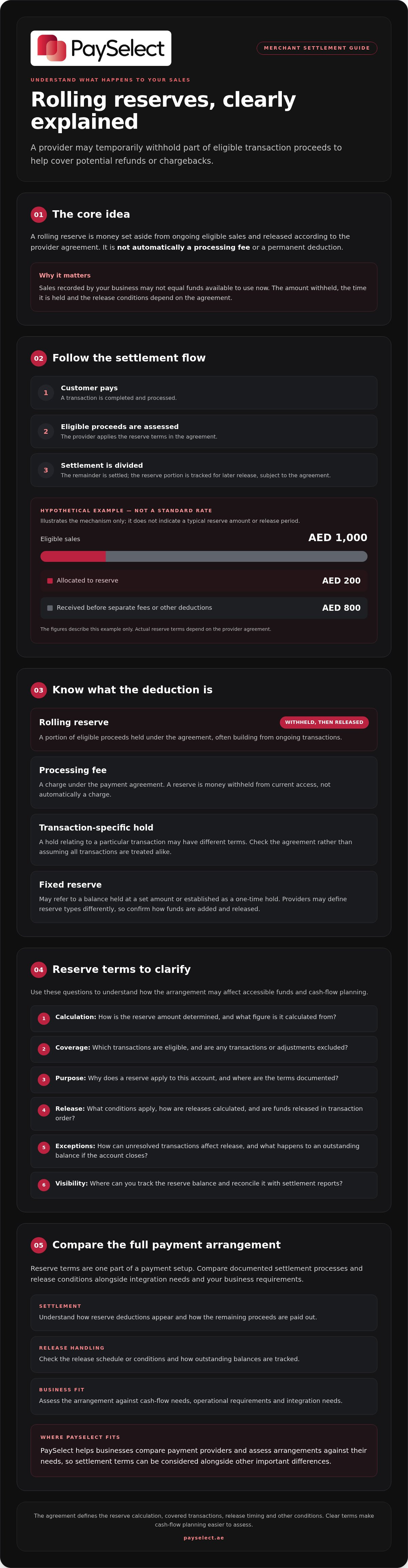
A rolling reserve is a portion of eligible transaction proceeds that a payment provider temporarily withholds under the terms of a merchant agreement. If you’re asking what are rolling reserves for a merchant account, think of it as money set aside from ongoing sales and released according to an agreed schedule or conditions. It isn’t automatically a processing fee or a permanent deduction.
A merchant account is part of the payment setup that allows a business to accept and receive card payments. With a rolling reserve, a provider may hold back an agreed share of eligible proceeds rather than making the full amount available at settlement. The agreement defines the calculation, covered transactions, release timing and other conditions.
This distinction matters for cash-flow planning. Sales recorded by your business may not match the funds currently available to use. Check how reserve deductions appear in settlement reports and what must happen before withheld funds are released. Don’t assume every transaction is treated the same way.
How is a rolling reserve different from a fixed reserve?
A rolling reserve is generally built from proceeds from ongoing transactions. A fixed reserve may instead refer to a balance held at a set amount or established as a one-time hold. Providers may use these terms differently, however, so check how your agreement defines each reserve type. Confirm how funds are added, whether the balance can change and how release works.
Why might a merchant account include a reserve?
A reserve is one way a provider may manage payment-related exposure. For example, future chargebacks or refunds could create costs after a transaction has been processed. Uncertainty around transactions may also inform a provider’s approach. This doesn’t mean every business will have a reserve or that the same rationale applies in every case.
Ask the provider why a reserve applies to your account and where the relevant terms appear in the agreement. Clarify which transactions are covered, how the amount is calculated and what triggers release. These details help you distinguish a temporary reserve from a fee and assess the settlement arrangement against your operating needs.
How Does a Rolling Reserve Affect Payment Settlements and Cash Flow?
A completed sale doesn’t always mean the full proceeds are immediately available to spend. In a simplified payment flow, a customer pays, the transaction is processed and the provider calculates the amount due for settlement. Under a rolling reserve arrangement, the provider retains an agreed portion of eligible proceeds and releases the remainder, subject to separate deductions and the agreement’s terms.
Hypothetical example, not a standard rate: A UAE business records AED 1,000 in eligible sales. For illustration, assume AED 200 is allocated to a reserve. The business receives AED 800 before any separate processing fees or other applicable deductions, while AED 200 is recorded as the reserve balance for those transactions. These figures show the mechanism only. They don’t indicate a typical reserve amount or release period.
This explains the cash-flow effect: gross sales reflect completed transactions, fees are charges under the payment agreement, and a reserve is money withheld from current access rather than automatically charged. Even after sales are completed, less cash is available for immediate operating needs. The reserve balance may build as new eligible transactions are processed and change as funds are released or adjusted under the agreement.
What happens to the withheld portion of a transaction?
The provider may retain an agreed portion before settling the remaining eligible proceeds to the business. The calculation base can vary, so confirm whether the reserve applies to gross transaction amounts or another defined figure, and whether particular transactions or adjustments are excluded. Check statements or account reports to see how the reserve is identified, tracked and reconciled with settlement activity.
When can reserve funds be released?
Release timing and conditions come from the provider agreement, not a universal schedule. Review how releases are calculated, whether funds are released in transaction order and what happens to an outstanding balance if the account closes. Ask how unresolved transactions or other conditions may affect release, and confirm where you can track the expected reserve balance.
The Office of the Comptroller of the Currency describes merchant reserve accounts and holdbacks as tools banks may use to limit a bank's credit risk. This U.S. reference provides background on the purpose of reserves. It isn’t a statement of UAE requirements or a substitute for your provider’s agreement.
For clearer cash-flow planning, compare written reserve conditions alongside settlement processes and your business requirements. PaySelect helps businesses compare payment gateway options, but it isn’t a payment processor. Confirm specific terms directly with each provider. Compare payment gateway options as part of your review.
Rolling Reserve vs. Fees, Holds, and Other Settlement Deductions
A settlement statement can show several kinds of deductions or unavailable funds. They don’t all mean the same thing. Knowing what are rolling reserves for a merchant account helps you distinguish a balance being held from a charge or a delay affecting an individual payment.
| Item | Purpose | Charged or withheld? | Where to check |
|---|---|---|---|
| Rolling reserve | A balance retained under agreed terms to manage payment-related exposure. | Generally withheld from eligible proceeds, with release governed by the agreement. | Reserve, settlement and release terms in the merchant agreement, plus account statements. |
| Processing fee | A charge for payment processing, as described in the provider’s pricing terms. | Charged or deducted according to the agreed fee structure. | Pricing schedule, fee terms and itemised transaction or settlement reports. |
| Transaction-specific hold | A hold that may apply to a particular payment or review. | Funds from the affected transaction may be temporarily unavailable. | Relevant transaction details, account notices and the agreement’s hold procedures. |
These are general distinctions, not universal labels. Providers may use different terms or account procedures, so match each statement entry to the definitions in your contract. A delayed settlement, for example, isn’t automatically evidence of a rolling reserve.
Is a rolling reserve the same as a payment processing fee?
No. A fee is a charge under the provider’s pricing terms. A reserve is generally a balance withheld under agreed conditions, and its release depends on the agreement. Don’t assume it’s a permanent deduction, but don’t assume when or how it will be released either. Reconcile statement entries with your contract and ask the provider to explain unfamiliar descriptions.
How does a reserve differ from a transaction hold or settlement delay?
A transaction-specific hold may affect one payment while it’s reviewed or handled under the provider’s procedures. A reserve may instead apply to eligible transactions more broadly, depending on the agreement. Ordinary settlement timing can also affect when funds arrive without being a reserve. Check which payments are affected, what the provider calls the action and what conditions govern the funds.
For each entry, confirm whether it’s a fee, reserve allocation, transaction hold or timing issue. Ask where the amount is recorded, whether it can be reconciled to individual transactions and which agreement clause explains its treatment. Clear definitions make it easier to understand your available balance and identify when you need more information from the provider.
What Should Merchants Check Before Accepting Rolling Reserve Terms?
Before signing or reviewing a payment agreement, make sure you understand how a reserve changes the funds your business can access. Don’t rely on a verbal summary or assume two providers use the same definitions. Ask for unclear or conflicting terms to be explained in writing, and keep that explanation with the agreement.
Which reserve details should the agreement make clear?
Use this checklist to review the terms with the provider:
Calculation basis
What amount is the reserve calculated from, and how is the amount determined?
Covered transactions
Which payments or balances are included? Are any transaction types excluded?
Release conditions
What triggers release, how is the release schedule set and what conditions could affect it?
Account closure
What happens to the reserve balance if you close the account or stop processing?
Reporting
Where can you see reserve additions, releases and the current balance in statements or account records?
Review process
How can you ask about a discrepancy or request clarification, and how will the provider explain its decision?
These answers help you interpret the contract and reconcile expected settlement proceeds with account records. If the agreement uses terms such as “holdback” or “reserve” without defining them clearly, ask the provider to identify the applicable clause and explain how it works for your account.
How can a business plan around withheld funds?
Keep expected settlement proceeds separate from cash currently available for operating expenses. In forecasts, track the reserve balance as a separate item and avoid assuming a specific release date unless the agreement clearly supports it. This gives you a more realistic view of funds available for commitments such as stock, payroll and refunds.
Build reserve tracking into your regular reconciliation routine. Assign someone to review settlement statements, match reserve movements to transaction records, monitor provider notices and follow up on unexplained differences. Include refunds in the same process so your records distinguish customer repayments from funds retained under reserve terms.
Clear terms also make provider comparisons more useful. PaySelect helps businesses compare payment gateways against their requirements; it doesn’t process payments. Compare payment gateway options and assess documented settlement and reserve arrangements alongside your wider business needs.
How to Compare Payment Providers When Reserve Terms Matter
Reserve conditions should be part of your provider assessment, not an afterthought. A payment option that looks suitable based on its headline processing rate may have settlement arrangements that affect how much cash your business can access and when. Asking “what are rolling reserves for a merchant account” is a useful starting point, but the decision also depends on how the full payment arrangement fits your operations.
Compare documented reserve terms alongside settlement processes, pricing, integration needs and support for account questions. Consider your business model, transaction volume and any international payment requirements. A provider’s fit depends on how its terms and services align with your needs, not on a single feature viewed in isolation.
What questions should merchants ask prospective providers?
Ask each provider the same questions so you can compare their answers clearly:
• How does the agreement define the reserve, calculate it and identify which transactions it covers?
• How are reserve additions and releases shown in statements or account records?
• What conditions affect release, and what happens to the balance if the account closes?
• How can the business ask for a review or clarification if the reserve terms or account records are unclear?
• What business or transaction circumstances could affect the reserve conditions for this account?
Ask for answers in writing and compare them with the current agreement. If a response uses different terms from the contract, ask the provider to explain the difference before making a decision. This gives you a clearer basis for comparing settlement expectations and planning cash flow.
When can independent payment guidance help?
Independent comparison can help businesses assess suitability beyond a headline rate. PaySelect helps businesses compare payment gateways and matches providers based on requirements such as industry, transaction volume and international needs. For larger organizations, payment infrastructure advisory and consulting can support a broader review. PaySelect is a comparison and advisory resource, not a payment processor, and it doesn’t set the provider’s contractual terms on your behalf.
Review the provider’s current agreement directly, then weigh its documented reserve conditions against your settlement needs, integration requirements and wider payment setup. To explore options for your business, compare payment gateway options with PaySelect.
Choose Payment Terms That Support Your Next Stage
Understanding what are rolling reserves for a merchant account helps explain why completed sales may not equal immediately available funds. A reserve is generally withheld under agreed terms, while processing fees are charges and transaction holds may affect individual payments. Check the agreement to see how funds are calculated, tracked and released.
Compare reserve conditions alongside settlement processes, integration needs and your wider business requirements. PaySelect is an independent payment comparison platform. Its matching tool considers merchant requirements such as industry, transaction volume and international needs. PaySelect helps businesses compare and select providers; it isn’t a payment processor, so confirm specific terms directly with each provider.
To compare payment gateway options and find a provider that fits your business requirements, use PaySelect’s comparison tool.
Frequently Asked Questions
What is a rolling reserve for a merchant account?
A rolling reserve is a portion of eligible payment proceeds that a provider temporarily withholds under the merchant agreement. If you’re asking “what are rolling reserves for a merchant account,” the key point is that the withheld amount is generally tracked as a balance, not automatically treated as a fee. The agreement should explain how the reserve is calculated, which transactions it covers and what conditions govern its release.
How does a rolling reserve work?
A provider withholds an agreed portion of eligible proceeds before settling the remainder to the business. As new transactions are processed, reserve funds may accumulate, and releases are handled according to the agreement’s schedule and conditions. The calculation may depend on which transactions qualify and how the agreement defines the reserve base. Check settlement statements or account records to see how additions, releases and the outstanding balance are recorded.
Why would a payment provider require a rolling reserve?
A provider may use a reserve to manage possible payment-related exposure, such as future chargebacks or refunds. The provider’s assessment and the account terms determine whether a reserve applies. It isn’t a universal condition for every merchant account. Ask the provider to explain the stated reason for your account and identify the relevant agreement terms. Don’t assume a general explanation describes your specific reserve conditions.
Is a rolling reserve a fee?
No. A rolling reserve is generally a balance withheld under agreed terms, while a processing fee is a charge under the provider’s pricing schedule. A reserve shouldn’t be assumed to be permanently deducted, but its release depends on the agreement. If a statement entry is unclear, compare it with the contract and ask the provider to explain how the amount is classified and recorded in your account.
When does a merchant get rolling reserve funds back?
There’s no universal release date. The provider agreement sets the timing and conditions, which may vary between accounts. Review how releases are calculated, whether other conditions can affect them and what happens to an outstanding balance if you close the account. Ask where to monitor the reserve and request clarification if the account records don’t match the release terms in your agreement.
Can a merchant avoid a rolling reserve?
There’s no universal way to avoid a reserve, and the provider’s current agreement determines whether one applies to your account. Before choosing a payment option, ask prospective providers to explain their reserve approach for your business and request the terms in writing. Compare those terms alongside settlement processes and other requirements. Don’t assume a reserve can be removed or changed unless the provider confirms it.
How can a rolling reserve affect business cash flow?
A rolling reserve can reduce the funds available for immediate business expenses, even after customers have completed their purchases. That can affect planning for inventory, payroll, refunds and other commitments. Track expected settlement proceeds separately from cash currently available, and include the reserve balance in your forecasts without assuming a release date. Reconcile provider statements regularly so withheld funds aren’t mistaken for fees or missing sales.
Disclaimer
This content is for informational purposes only and should not be considered financial, legal, or regulatory advice. Payment provider availability, pricing, and approval processes vary depending on individual business circumstances. PaySelect does not guarantee provider acceptance or specific outcomes. Businesses should conduct their own due diligence before entering into any agreements.
Empowering businesses to achieve greater growth