
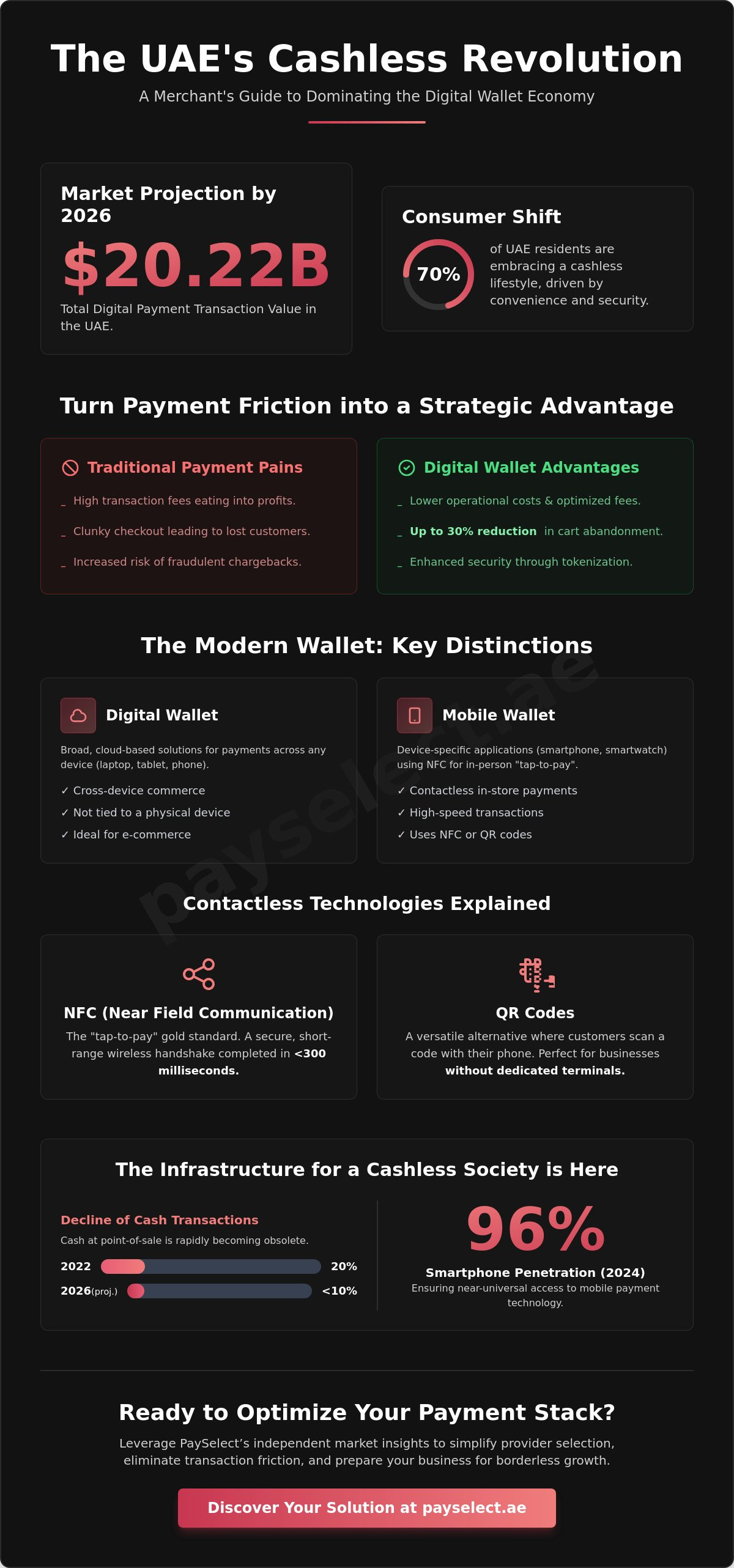
By 2026, the UAE digital payments market is projected to hit a total transaction value of 20.22 billion dollars, as nearly 70 percent of residents shift toward a cashless lifestyle. You've likely felt the sting of high transaction fees from traditional methods and the frustration of losing customers during a clunky checkout process. It's clear that the modern digital wallet is no longer just an optional convenience; it's the core engine for business expansion in the region. We understand that managing different payment technologies can feel overwhelming when you're focused on scaling your operations.
This guide shows you how to leverage these tools to secure faster checkout times, drive higher conversion rates, and lower your operational costs through an optimized payment stack. We'll break down the industry landscape to help you distinguish between various provider capabilities without using technical jargon. You'll discover how to streamline your settlements, accelerate your growth, and empower your business to thrive in a borderless economy. We'll explore how shifting your strategy can turn payment friction into a strategic advantage for your brand.
Key Takeaways
• Understand how the modern digital wallet has evolved into a secure ecosystem that streamlines payment credentials for the UAE’s digital-first economy.
• Master the mechanics of mobile transactions to ensure seamless, contactless interactions at your retail terminals through NFC and QR code integration.
• Accelerate your checkout flow and capture new customer segments by adopting payment methods that cater to the region's rapidly growing mobile-savvy demographic.
• Audit your current hardware and navigate provider compatibility to build a future-proof payment stack that eliminates transaction friction.
• Discover how to leverage PaySelect’s independent market insights to simplify provider selection and optimize your business for borderless growth.
Defining the Digital Wallet in the Modern UAE Economy
The traditional leather wallet is rapidly becoming an artifact of the past. In 2026, the UAE economy operates on integrated digital ecosystems that prioritize speed, security, and user experience. A digital wallet serves as a secure, encrypted repository for payment credentials, identity documents, and digital assets. To understand the foundation of this technology, one might ask: What is a digital wallet? At its core, it is a software application that stores payment information, allowing for instant transactions without the need for physical cards or cash.
Security in this space is anchored by tokenization. This process replaces sensitive card numbers with unique digital identifiers. It ensures that even if data is intercepted, the actual financial details remain hidden and useless to unauthorized parties. UAE merchants benefit from this because it lowers the risk of fraudulent chargebacks and builds consumer trust. The UAE has emerged as a global leader in transaction volume due to the government's Digital Economy Strategy, which aims to double the sector's GDP contribution to 20% by 2031. With a smartphone penetration rate reaching 96% in 2024, the infrastructure for a cashless society is already mature and high-performing.
The Distinction Between Mobile Wallets and Digital Wallets
Terminology often causes confusion for business owners. A mobile wallet is typically tied to a specific device, like a smartphone or smartwatch, using Near Field Communication (NFC) for in-person taps. In contrast, digital wallets are broader, cloud-based solutions. They allow customers to complete purchases across laptops, tablets, and phones without needing a physical device present. This flexibility is vital for modern payment gateways that must support cross-border and cross-device commerce. Seamlessness is the standard for 2026; if a customer has to re-enter their card details, the merchant has already lost the sale.
The Evolution of Consumer Expectations
Consumer behavior has shifted rapidly across the Emirates. In 2022, cash accounted for roughly 20% of point-of-sale transactions in the UAE; by 2026, that figure is projected to drop below 10%. Contactless is no longer a luxury; it is a mandatory requirement for business survival. These digital solutions solve the primary pain point of checkout friction. By removing the need for manual data entry, merchants can reduce shopping cart abandonment rates by up to 30%. Modern applications also integrate loyalty programs directly into the payment flow. Customers earn points and redeem rewards instantly, turning a simple transaction into a strategic tool for business growth.
Streamlined Checkouts
Faster processing times lead to higher conversion rates.
Enhanced Security
Tokenization protects both the merchant and the buyer from data breaches.
Customer Retention
Integrated loyalty features encourage repeat business through automated rewards.
The Mechanics of Seamless Mobile Wallet Transactions
A mobile transaction is more than a simple tap; it's a sophisticated exchange of encrypted data. When a customer brings their device near a terminal, a digital handshake occurs in less than 300 milliseconds. This interaction replaces vulnerable card details with a one-time token, ensuring that sensitive financial information never actually enters your system. For UAE businesses, this speed translates to shorter queues, higher conversion rates, and a frictionless checkout experience.
Near Field Communication (NFC) powers the standard tap-to-pay experience. It operates on a short-range wireless frequency, typically requiring the device to be within 4 centimeters of the reader. While NFC is the gold standard for speed, QR codes offer a versatile alternative. Merchants display a static or dynamic QR code that customers scan using their smartphone camera. This method is particularly effective for small-scale vendors or delivery services that don't want to carry heavy equipment. Once the wallet authorizes the payment, the settlement process begins. Funds are cleared through the payment network and typically arrive in your business bank account within 24 to 48 hours, depending on your provider's specific cycle.
NFC vs. QR Codes: Which Should Your Business Prioritize?
Choosing between these technologies depends on your infrastructure and customer base. NFC requires hardware with specific internal antennas to process contactless signals. Most modern POS machines now come equipped with these sensors, allowing them to handle various global protocols simultaneously. QR codes are significantly more cost-effective to deploy; they require nothing more than a printed sticker or a mobile screen. This makes them ideal for rapid scaling in high-volume, low-margin environments. To maximize your reach, adopt systems that support both protocols to ensure you never turn a customer away.
Security Protocols and Fraud Prevention
Digital transactions are inherently more secure than physical card swipes. Biometric authentication, such as fingerprint scanning or facial recognition, ensures the person holding the device is the authorized owner. Industry data from 2023 shows that digital transactions can reduce fraud by up to 70% compared to traditional magnetic strip cards. This is largely due to tokenization and dynamic security codes. Unlike a physical CVV that stays the same, a digital wallet generates a unique code for every single transaction. This means even if data is intercepted, it's useless for future purchases. You can further protect your revenue by choosing payment gateways that offer integrated real-time risk monitoring and automated compliance checks.
Strategic Advantages: Why Your Business Must Accept Digital Wallets
The UAE's push toward a cashless society moves faster than most analysts predicted. By 2026, mobile-first interactions will define the retail experience. Accepting a digital wallet isn't just a convenience; it's a strategic necessity for high-volume merchants. These tools accelerate the checkout flow by up to 60% compared to traditional card entry. This speed allows businesses to handle more customers during peak hours without increasing staff or infrastructure.
Market Reach
Captures the digital-first demographic, which makes up over 90% of the UAE population as of 2024.
Risk Mitigation
Eliminates physical theft and accounting errors that cost businesses an average of 1% to 3% of annual revenue.
Data Intelligence
Provides real-time dashboards to track spending patterns and optimize marketing strategies.
This technology also bridges the gap for the unbanked sector. By removing the requirement for physical plastic, you open your doors to a wider, more diverse market. Beyond security, provider dashboards offer deep data insights. These analytics empower you to understand your customers with surgical precision. You don't have to guess what your customers want; the data tells you exactly how they spend.
Boosting Conversion Rates in E-commerce
One-tap purchases change the game for online retailers. Manual card entry is a major friction point that leads to 70% cart abandonment rates. A digital wallet eliminates this hurdle by storing encrypted data for instant retrieval. Mobile commerce now accounts for 60% of all UAE e-commerce transactions, a figure expected to rise by 2026. A 2024 retail report showed that UAE merchants who integrated multiple payment options saw a 25% increase in mobile conversion rates within six months. This seamless experience turns casual browsers into committed buyers.
Cost Optimization and Transaction Efficiency
Efficiency defines the modern financial era. Processing fees for wallet transactions are often more competitive than traditional credit card rates, especially for businesses moving high volumes. These systems also streamline cross-border payments for international clients. This removes the delays and high costs associated with legacy banking systems. Investing in this infrastructure today ensures a high ROI by reducing settlement times and operational overhead. Modern systems allow you to integrate, optimize, and scale your payment setup without technical friction. Merchants who upgrade now will be positioned to lead as the global economy becomes increasingly borderless.
Navigating the Integration: From NFC to QR Codes
Transitioning to a digital-first payment environment requires a strategic audit of your existing infrastructure. Start by evaluating your current hardware to ensure it meets the Near Field Communication (NFC) standards required for modern mobile payments. By 2026, industry analysts expect 95% of UAE retail terminals to support contactless interactions. If your terminal is older than three years, it's time for an upgrade. Consult with your payment service provider to enable specific digital brands and ensure your backend can handle tokenized transactions. This shift isn't just about hardware; it's about data. Use transaction reports to monitor which wallet types your customers prefer. This insight allows you to optimize your checkout experience based on real-time adoption rates.
• Audit POS hardware for NFC and QR code compatibility.
• Enable diverse payment brands through your provider.
• Train staff to resolve mobile payment errors quickly.
• Analyze weekly reports to track shifting consumer preferences.
Integrating Wallets into Your Online Store
Success in the digital economy depends on a frictionless checkout. You must optimize your payment gateways to support API-based integrations that pull customer data directly from their mobile devices. This eliminates manual entry and reduces cart abandonment. In 2023, mobile commerce accounted for over 70% of total e-commerce sales in the UAE. To capture this market, add "Quick Pay" buttons to your product pages. Test the user experience across iOS and Android platforms to ensure the wallet interface loads in under two seconds. Speed is your greatest competitive advantage.
Overcoming Common Implementation Barriers
Many small business owners mistakenly believe that advanced integration is reserved for global enterprises. Data shows that SMEs adopting digital payments see a 15% increase in average transaction value within the first six months of implementation. Connectivity issues often plague retail environments, but you can solve this by implementing static QR codes as a reliable backup to NFC. Handling refunds in a digital ecosystem is another common concern. Modern systems streamline this by linking the original transaction token to the refund request, ensuring funds return to the customer accurately. This transparency builds trust and simplifies your end-of-day settlements. PaySelect removes these technical hurdles by providing a unified platform that manages multiple payment methods through a single, stable interface.
Optimizing Your Payment Stack with PaySelect
Selecting a partner in a market with over 30 active payment providers is a high-stakes decision. Many merchants face the frustration of long onboarding times and opaque fee structures that eat into margins. PaySelect acts as an independent bridge between your business and the complex financial landscape. We help you identify which payment gateways align with your specific transaction volume and technical requirements. Our goal is to remove the friction that usually accompanies a payment setup, allowing you to focus on your core operations.
Transparency in a Complex Market
Comparing providers requires more than just looking at a headline rate. You must evaluate how each entity handles the diverse digital wallet ecosystem in the UAE. Some providers offer superior support for local schemes, while others focus on global interoperability. PaySelect provides an unbiased view of the market. We don't favor one provider over another. Instead, we highlight the functional differences that impact your bottom line. This approach empowers you to scale efficiently without being locked into a suboptimal contract.
Our commitment to transparency means helping you identify providers that offer the most robust wallet support for your specific industry. High-growth businesses often struggle with:
• Hidden processing fees that appear only after the first settlement.
• Rigid API structures that make custom integrations difficult.
• Delayed settlement cycles that impact daily cash flow.
PaySelect addresses these pain points by offering an expert advisory layer. We ensure your payment strategy is built for the long term, not just for today.Take Control of Your Payment Infrastructure
Inefficient payment stacks often lead to technical debt and missed opportunities. You can use our "Take the Test" tool to audit your current expenses and find a more suitable match. This tool uses your specific business data to filter out providers that don't meet your needs. It's a fast, logical way to see where your current setup falls short. For enterprise-level organizations, a bespoke strategy is the only way to maintain a competitive edge. It ensures your infrastructure is ready for the high-volume demands of the 2026 market.
Beyond digital transactions, you may also need to consider how your physical presence aligns with your digital strategy. Exploring modern pos machines can help create a unified experience for your customers. Don't let complex setups or integration headaches slow your growth. You deserve a payment stack that is as ambitious as your business goals. Start your optimization journey today and simplify your selection process with confidence.
Future-Proof Your Payment Infrastructure Today
By 2026, the UAE's payment landscape will be defined by speed and frictionless security. Merchants who adopt versatile NFC and QR code integrations now position themselves to capture a market where 64% of residents already prefer mobile payments over physical cards. Transitioning your payment stack isn't just a technical upgrade; it's a strategic move to eliminate checkout friction and accelerate your local growth.
Choosing the right partner is often the biggest hurdle for growing businesses. You face complex fee structures and integration delays that can stall your momentum. PaySelect acts as an independent and unbiased B2B advisory, offering deep expertise in the MENA payment landscape to simplify this choice. Our streamlined comparison tools help SMEs and enterprises evaluate providers based on transparent data, ensuring your digital wallet strategy is both scalable and cost-effective.
Find the perfect payment provider for your business with PaySelect and start building a borderless future. Your business is ready to scale, and the right payment foundation will take it there.
Frequently Asked Questions
Is it expensive for a small business to start accepting digital wallets?
Starting to accept digital wallets is highly affordable because it eliminates the need for expensive physical infrastructure. Most modern systems allow you to leverage existing hardware or simple software integrations. Industry data from 2023 indicates that moving to digital-first payments can lower operational overhead by 20% for small retailers. This shift lets you focus on growth rather than managing complex cash systems or high-maintenance legacy machines.
What is the difference between a digital wallet and a payment gateway?
A digital wallet is an application that stores a consumer's payment credentials, while a payment gateway is the secure bridge that transfers transaction data from the merchant to the bank. Think of the wallet as the customer's tool and the gateway as your business's engine. You'll need a robust gateway to process the various wallet types your customers use every day. This distinction is vital for optimizing your checkout flow.
Are digital wallet transactions more secure than traditional credit card payments?
Digital wallet transactions are significantly more secure than traditional credit cards because they utilize advanced tokenization and biometric authentication. Instead of sharing actual card numbers, these systems use unique digital identifiers that change with every purchase. Security reports from 2024 show that tokenized payments reduce the risk of data breaches by 45% compared to static card details. This layer of protection builds immediate trust with your tech-savvy UAE customers.
Do I need a special POS machine to accept mobile wallet payments?
You don't necessarily need a new machine if your current POS terminal supports Near Field Communication (NFC) or displays QR codes. Most terminals issued in the UAE after 2021 are already equipped with these capabilities. If you're an online merchant, you only need to integrate the correct API to start accepting payments. This flexibility ensures you can scale your payment options without a massive upfront investment in hardware.
Can digital wallets help my business with international customers?
Digital wallets empower your business to reach international customers by removing the friction of currency conversion and local payment hurdles. They facilitate borderless commerce, allowing tourists and global shoppers to pay using their preferred local wallet without delays. By 2026, cross-border wallet transactions are expected to grow by 25%, making this an essential tool for any UAE business looking to capture global market share and expand its reach.
How long does it take to integrate digital wallet payments into an existing website?
Integrating digital wallet payments into your website typically takes between 24 and 72 hours when using modern, developer-friendly APIs. The process is designed to be seamless, ensuring your business doesn't face downtime during the transition. Our focus is on removing technical barriers so you can start processing transactions immediately. This rapid deployment allows you to respond to market trends and customer demands with absolute speed and efficiency.
What are the main digital wallet technologies currently used in the UAE?
The UAE market primarily utilizes Near Field Communication (NFC) for tap-to-pay transactions and dynamic QR codes for instant mobile transfers. NFC technology is the standard for in-store payments, representing over 80% of the contactless market share in the region as of early 2024. These technologies provide the speed and reliability that local consumers expect. Adopting both ensures your business remains competitive in a rapidly evolving digital economy.
How does PaySelect help me choose the right provider for wallet payments?
PaySelect simplifies the provider selection process by matching your specific business requirements with the most efficient payment solutions available. We address common pain points like slow settlement cycles, complex compliance hurdles, and high integration costs. Our platform acts as a sophisticated navigator, helping you compare provider performance without bias. We streamline your path to scaling, ensuring you choose a partner that offers the best reliability and global reach.
Disclaimer
This content is for informational purposes only and should not be considered financial, legal, or regulatory advice. Payment provider availability, pricing, and approval processes vary depending on individual business circumstances. PaySelect does not guarantee provider acceptance or specific outcomes. Businesses should conduct their own due diligence before entering into any agreements.
Empowering businesses to achieve greater growth