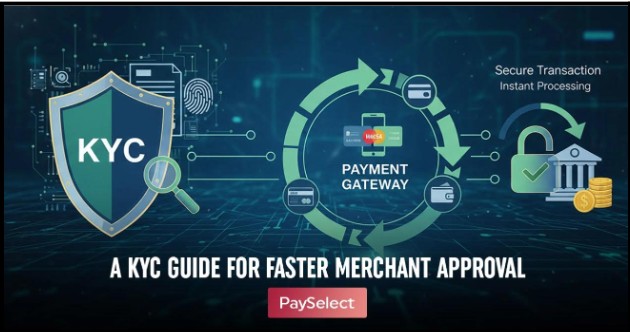
In today’s fast-moving digital payments landscape, Know Your Customer (KYC) compliance sits at the core of every approval process. Whether you are applying for a payment gateway, a POS terminal, a cross-border account or any fintech service, the documents you submit determine how quickly you get onboarded and how seamlessly your payments begin to flow.
This guide explains what KYC is, why it matters, and the documents every business should prepare before starting their application. It is especially useful for businesses planning to compare online payment gateways in the UAE and choose the right provider for their needs.
What Is KYC and Why Does It Matter?
KYC is a mandatory process used by financial institutions and payment providers to verify the identity, legitimacy and risk level of a business. It serves three essential purposes:
1. Fraud and Risk Prevention :
KYC helps providers confirm that your company is genuine and not linked to suspicious or prohibited activities.
2. Regulatory Compliance :
Payment providers must follow local and international compliance rules such as AML, CFT, FATF standards and Central Bank regulations.
3. Faster Merchant Activation :
When your documents are complete and accurate, your merchant account is approved faster and with fewer compliance escalations.
The Standard KYC Package: Core Documents You Must Prepare
While requirements differ slightly between providers, most payment processors follow a similar checklist.
1. Valid Trade License or Business Registration :
This confirms your company’s legal status, approved activities and ownership details.
Tip: Make sure your listed activity covers retail, e-commerce or your intended operations to avoid delays.
2. Shareholder and Beneficial Owner Documents :
For every shareholder with 25 percent or more ownership, providers typically request:
- Passport copy.
- Emirates ID (for UAE residents).
- Visa page (if applicable).
- Proof of residential address.
These documents verify Ultimate Beneficial Owners (UBOs).
3. Company Ownership Structure :
A simple ownership chart showing parent entities, subsidiaries and shareholding percentages.
This is mandatory when the structure spans multiple companies or countries.
4. Proof of Address :
This can be a recent utility bill, tenancy contract, office lease or a bank statement showing the address. It must be dated within the last three months.
5. Bank Account Details :
You may be asked to provide a bank letter, IBAN confirmation or a void cheque. This ensures settlements are processed correctly.
6. Business Overview and Website :
Payment providers review:
- Your products or services
- How and where you sell
- Pricing clarity
- Refund and return policies
For e-commerce merchants, having a functional website or active social media storefront is essential.
7. Transaction and Volume Estimates :
Providers need your projected:
- Monthly processing volume
- Average ticket size
- Maximum ticket size
- Customer geographies
This information supports risk assessment and pricing.
8. Sample Invoices or Contracts (If Required) :
Often requested for B2B, subscription-based, cross-border or high-value businesses to demonstrate operational activity.
Industry-Specific KYC Requirements
Certain sectors require additional documentation.
E-commerce Merchants :
- Delivery and fulfillment policy
- Refund and cancellation policy
- Clear product or service descriptions
Travel Agencies :
- IATA certification
- Supplier agreements
High-Risk Industries :
Examples include crypto, FX, ticketing and luxury goods. Expect:
- Enhanced due diligence
- Source of funds
- Business model questionnaire
Cross-Border Fintech Accounts :
- Financial statements.
- Proof of operating activity.
- Source of wealth for major shareholders.
Why KYC Gets Delayed and How to Avoid It
The most common delays occur due to:
- Expired, unclear or incomplete documents
- Business activities not matching the trade license
- Missing UBO details
- Lack of website information
- High-risk indicators with no explanation
Pro Tip: Submit a complete KYC pack in one folder or email. Clear documentation speeds up every provider’s compliance review.
How PaySelect Helps You Get Approved Faster
PaySelect simplifies the process by:
- Guiding you through the exact documents each provider requires
- Preparing a complete KYC pack that passes compliance checks
- Matching you with payment gateways suited to your business model
- Helping you avoid delays during approval
PaySelect ensures faster onboarding and a smoother revenue flow. With this platform, businesses can perform an online payment gateway comparison and make informed decisions.
Final Checklist: Your Ready-to-Go KYC Pack :
- Trade license.
- Passport and Emirates ID for all shareholders.
- Ownership structure.
- Bank letter or IBAN confirmation.
- Proof of address.
- Website or social media links.
- Estimated transaction volumes.
- Business activity description.
This streamlined checklist ensures you are fully prepared before you compare online payment gateways in the UAE and select the right provider for your needs.
Wrapping Up :
A smooth KYC process is the key to fast payment gateway approval. When your documents are clear and complete, providers can onboard you without delays. PaySelect helps make this easy by guiding you through every requirement and preparing a ready-to-submit KYC pack.
With expert support and access to leading providers, PaySelect ensures you can compare online payment gateways in the UAE confidently and get approved faster.
Empowering businesses to achieve greater growth