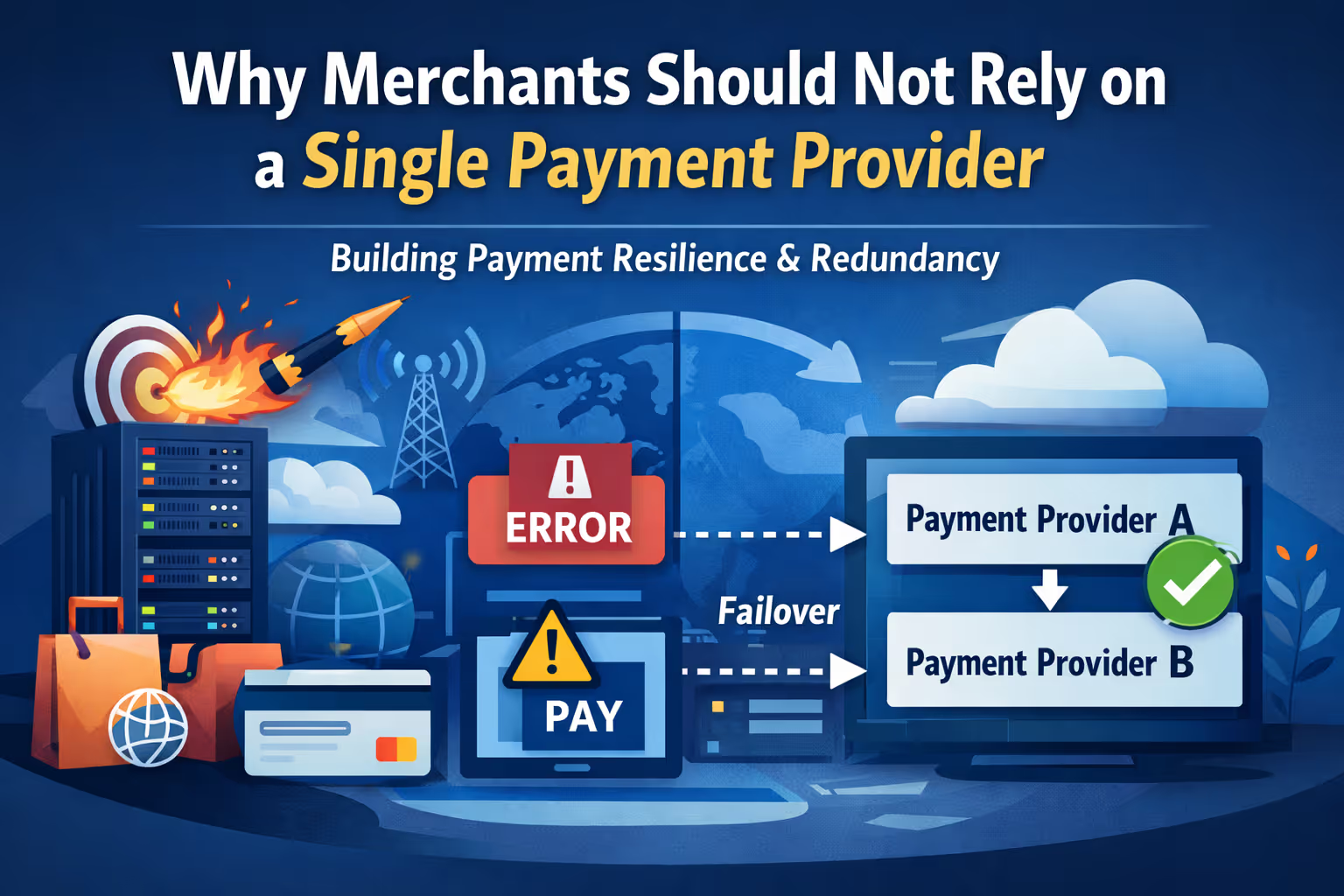
Payments are often perceived as purely digital systems. A customer clicks “Pay”, the transaction is approved within seconds, and the order is completed.
But behind every successful payment lies a complex infrastructure that combines software, networks, and physical systems.
These include:
- Data centers
- Cloud infrastructure
- Payment processing networks
- Telecom connectivity
- Card scheme routing
- Acquiring bank systems
While this infrastructure is designed to be highly resilient, disruptions can still occur. For merchants, this highlights an important but often overlooked topic: payment redundancy.
The Hidden Risk in Many Payment Setups
Many businesses rely on a single payment provider to process all their transactions.
This approach is simple and convenient, especially in the early stages of a business. However, it also creates a single point of failure.
If the provider experiences an outage – whether due to infrastructure issues, technical errors, or network disruptions – merchants may suddenly find themselves unable to accept payments.
When payments stop, revenue stops.
Even short disruptions can have a significant impact on businesses operating in industries such as:
- E-commerce
- Travel and hospitality
- Marketplaces
- Digital services
- Retail
Payments Infrastructure Is More Complex Than It Appears
Modern payment processing relies on multiple interconnected layers of infrastructure.
A single transaction may involve:
- The merchant’s website or POS system
- A payment gateway
- The acquiring bank
- Card networks such as Visa or Mastercard
- The issuing bank of the customer
Each step relies on servers, networks, and data centers operating reliably in the background.
While major payment providers invest heavily in resilience and disaster recovery, no system is completely immune to disruptions. Infrastructure incidents, software issues, and network outages have affected even some of the largest payment platforms globally.
Why Large Companies Use Multiple Payment Providers
To reduce risk, many large merchants operate with multiple payment providers.
This setup allows transactions to be routed between providers if one system experiences issues.
Benefits of a multi-provider strategy include:
- Improved business continuity
- Reduced dependency on a single provider
- Higher payment success rates
- Geographic redundancy
- Greater negotiating power on pricing
Large global companies, airlines, marketplaces, and subscription platforms commonly adopt this approach.
Building a More Resilient Payment Stack
Merchants do not necessarily need complex orchestration systems to improve resilience. Even simple steps can significantly reduce risk.
Some strategies include:
- Integrating a secondary payment gateway
- Using different acquiring banks for different regions
- Supporting alternative payment methods
- Monitoring payment performance across providers
Designing a resilient payment stack is similar to building redundancy in other critical parts of a business infrastructure.
Just as companies diversify suppliers in their supply chains, payments should also be structured to ensure continuity.
The Role of Payment Strategy
Choosing the right payment providers is not only about pricing or features. It is also about designing a system that can continue operating under different circumstances.
At PaySelect, we work with merchants to help them evaluate and compare payment providers based on their business model, geographic markets, and transaction volumes.
This includes considering resilience, redundancy, and long-term scalability.
Because when payments are mission-critical to a business, the infrastructure behind them should be treated the same way.
Empowering businesses to achieve greater growth